Restoring a vehicle like the “Vice Van” is as much an archeological dig as it is a mechanical project. Before we can start soldering or turning wrenches, we have to know exactly what we have.
Below is the complete equipment manifest of The Vice Van as it sits today. This represents the pinnacle of 1989 surveillance technology—hardware that built cases and recorded history.
| Category | Component | Model / Identifier | Status / Observation |
| Radio/RF | Communications Receiver | ICOM IC-R7000 | The “Master Scanner.” Faceplate is clean; dial feels smooth. |
| Radio/RF | VHF/UHF Transceiver | Midland Syn-Tech (x2) | Labeled for local agency monitoring. Brittle coiled cords. |
| Radio/RF | Handheld-to-Base Converter | MA-COM Unit | Converts handheld radios into low-power base stations. |
| Radio/RF | Handheld-to-Base Converter | Motorola Unit | Integrated converter for handheld-to-antenna signal boosting. |
| Audio | Tape Recording Deck | Marantz PMD Series (x2) | Labeled “Audio 1” & “Audio 2.” 1/4″ and Mic inputs. |
| Audio | Audio Mixer | Shure M267 | 5-Channel. Used for balancing covert mic feeds. |
| Video | Industrial VCR | Panasonic AG-1070DC (x2) | 12V DC powered. One marked with maintenance tag “41650.” |
| Video | Video Selector | Archer Audio/Video | Routing hub for monitors and recording decks. |
| Monitoring | Primary Monitor | Panasonic CRT | Mounted in the main rack; 1994 timestamp on last use. |
| Monitoring | Secondary Monitor | Hitachi CRT | Smaller auxiliary monitor for multi-cam viewing. |
| Control | PTZ Controller | White Joystick Box | Remotely operates the roof-mounted periscope camera. |
| Electrical | Power Switchboard | Seatron Custom Panel | Toggles for A/C, Vent, Heat, and Stabilizers. |
| Electrical | Analog Gauges | General Electric D-C | Large Volts and Amperes meters for battery health. |
| Security | Alarm Interface | AutoPage 4242 | Alarm interface box for securing the van and its contents. |
Technical Breakdown by System
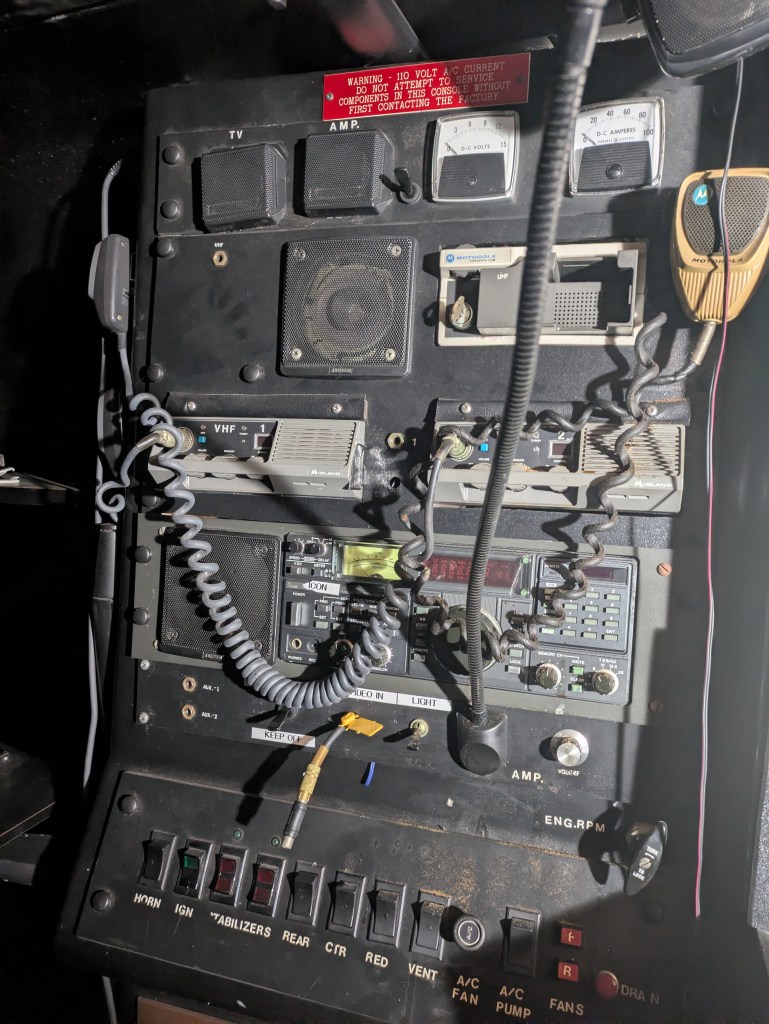
1. Signal Interception (Radio/RF)
This was the van’s “ears.” The goal was to monitor every relevant frequency in the Hillsborough/Tampa area.
- The ICOM IC-R7000: This is a wideband communications receiver. Unlike a consumer scanner, this unit can pick up signals from 25MHz to 2000MHz. It could have been used to find “pirate” frequencies or unlisted tactical channels used by suspects.
- The Midland Syn-Techs: These are rugged, EPROM programmable mobile radios. These were the “workhorses” dedicated to the primary dispatch and tactical channels for the Sheriff’s Office.
- The Converters (MA-COM & Motorola): These units allowed detectives to take their standard-issue handheld radios and “dock” them. This instantly connected the handhelds to higher-gain antennas and the van’s power supply, turning a portable radio into a powerful base station with superior range.
2. Evidence Capture (Audio & Video)
Everything heard or seen had to be recorded to be admissible in court.
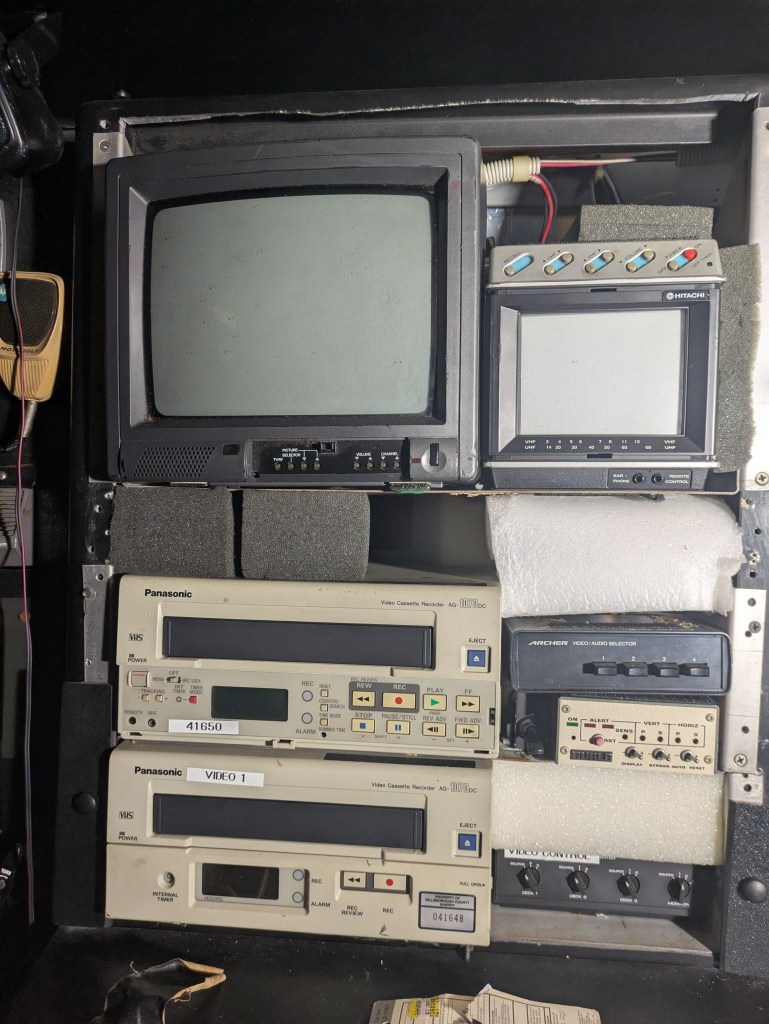
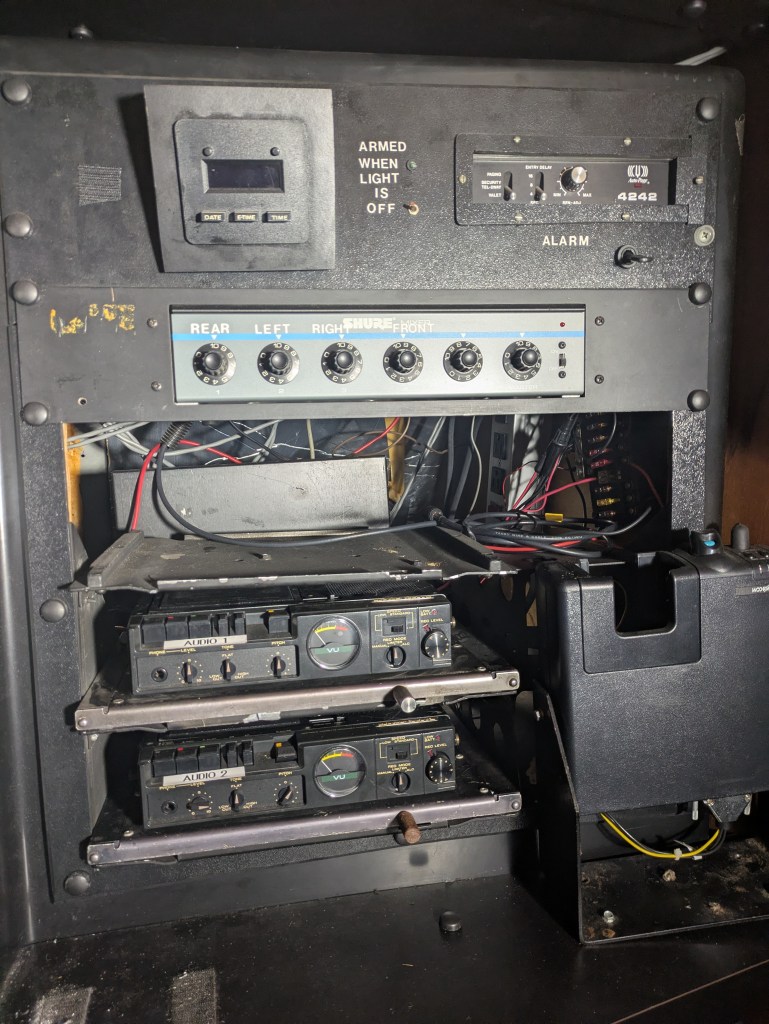
- Marantz PMD Series: These are legendary in the field for their “Direct Drive” systems and high-fidelity recording. They feature built-in limiters to prevent loud noises (like a door kicking in) from distorting the tape, ensuring every word of a whispered conversation was caught.
- Shure M267 Mixer: This 5-channel mixer acted as the ears of the operation. It was specifically wired to a four-microphone array—one hidden on each side of the van (Front, Back, Left, and Right). The detectives could adjust the gain on each individual mic to isolate a conversation happening on the sidewalk (Right) while cutting out traffic noise from the street (Left). This spatial mixing ensured that no matter where a deal was going down, the audio was centered and clear for the recording.
- Panasonic AG-1070DC VCRs: These are industrial 12-volt DC units. Unlike home VCRs, these were designed to run off battery power and survive the vibrations of a moving vehicle. They provided the visual proof of who met whom and when.
3. Observation & Control (Monitoring)
This allowed the “Vice Squad 527” team to stay out of sight while maintaining total situational awareness.
- CRT Monitor Array (Panasonic & Hitachi): Before the era of flat screens, these heavy-duty CRT monitors provided the only way to see what the cameras were seeing.
- The Motion Detector: This joystick box is the interface for a high-tech motion detector alarm. In a modern system, motion detection is handled by software; in 1994, this was the “brain” that did it manually via analog signal analysis
4. Tactical Infrastructure (Electrical & Security)
This is the “life support” that kept the detectives from being caught or overheating.
- The Seatron Switchboard: A custom-built power distribution panel. The “Stabilizer” switch is a key detail—it operated jacks to keep the van’s suspension from moving when the operators shifted their weight, which would prevent the “tell-tale” rocking that gives away a stakeout van.
- GE Analog Gauges: These provided a real-time “health check” of the auxiliary battery bank. In a high-drain environment with multiple CRTs and radios running, monitoring the batteries was critical to ensure the van didn’t die in the middle of a sting.
- AutoPage 4242: A high-end 80s security system. Beyond just a car alarm, this likely protected the rear equipment doors and the “periscope” camera to prevent tampering if the van was left unattended.
The Uncatalogued Cache: Beyond the Rack
While the primary equipment is bolted into the racks, the rear of the van serves as a graveyard for loose tactical gear that was likely “tossed in” when the unit was finally decommissioned.
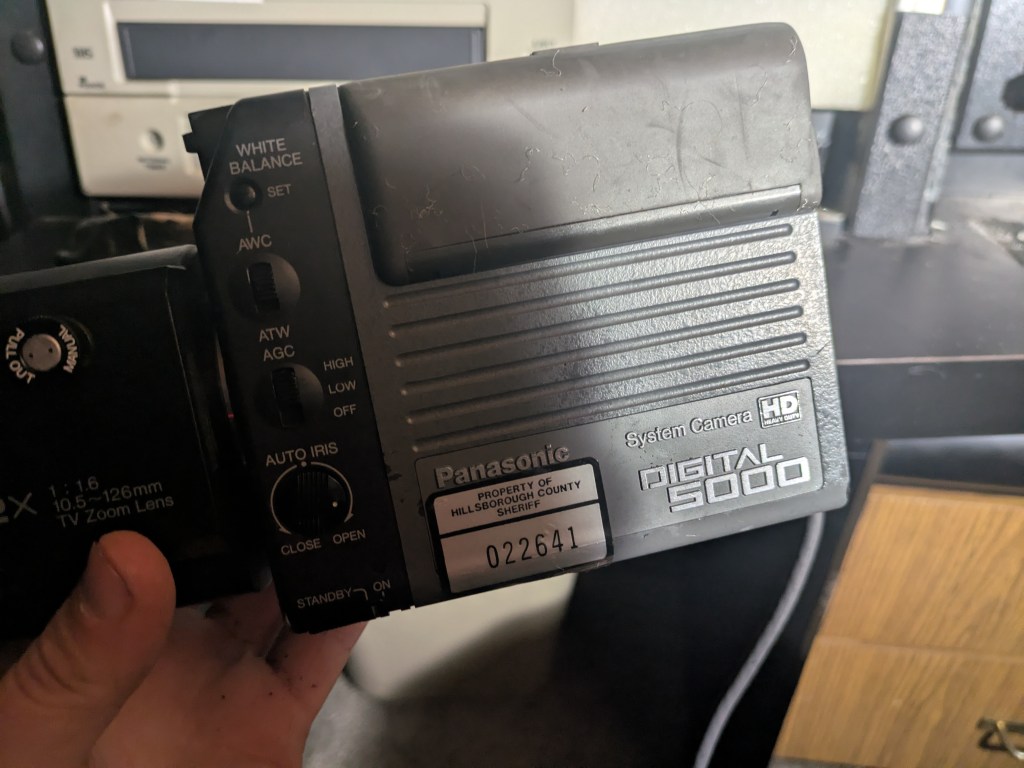
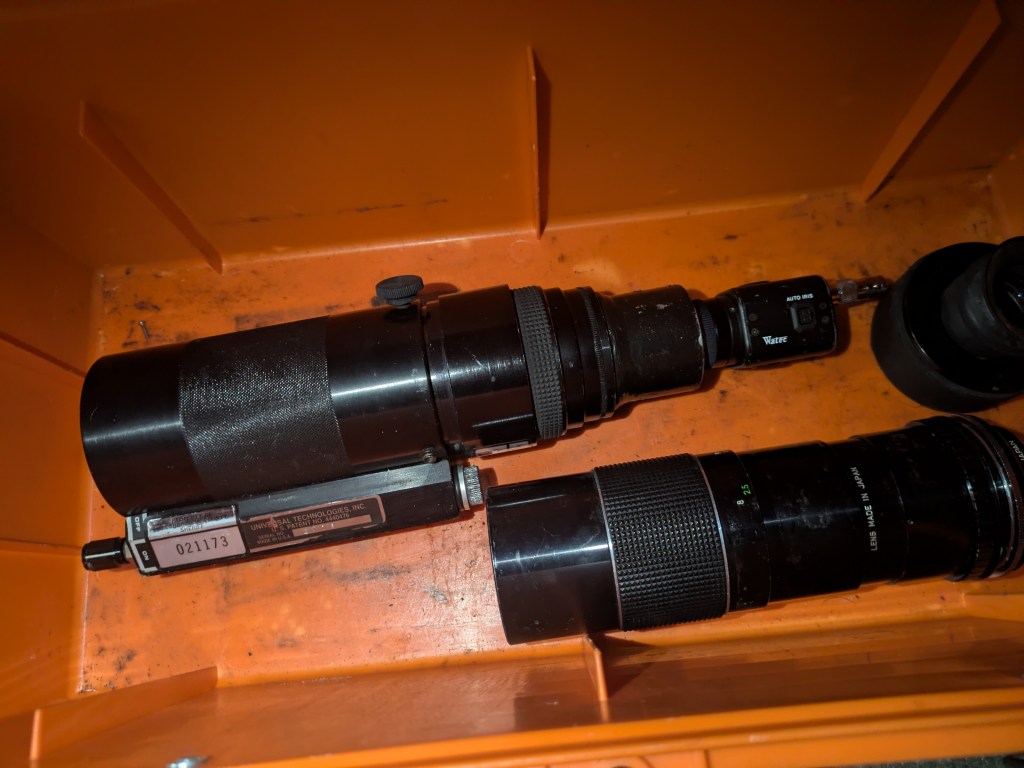
We’ve discovered boxes containing an assortment of loose cameras and high-zoom lenses, ranging from standard surveillance glass to specialized lenses.
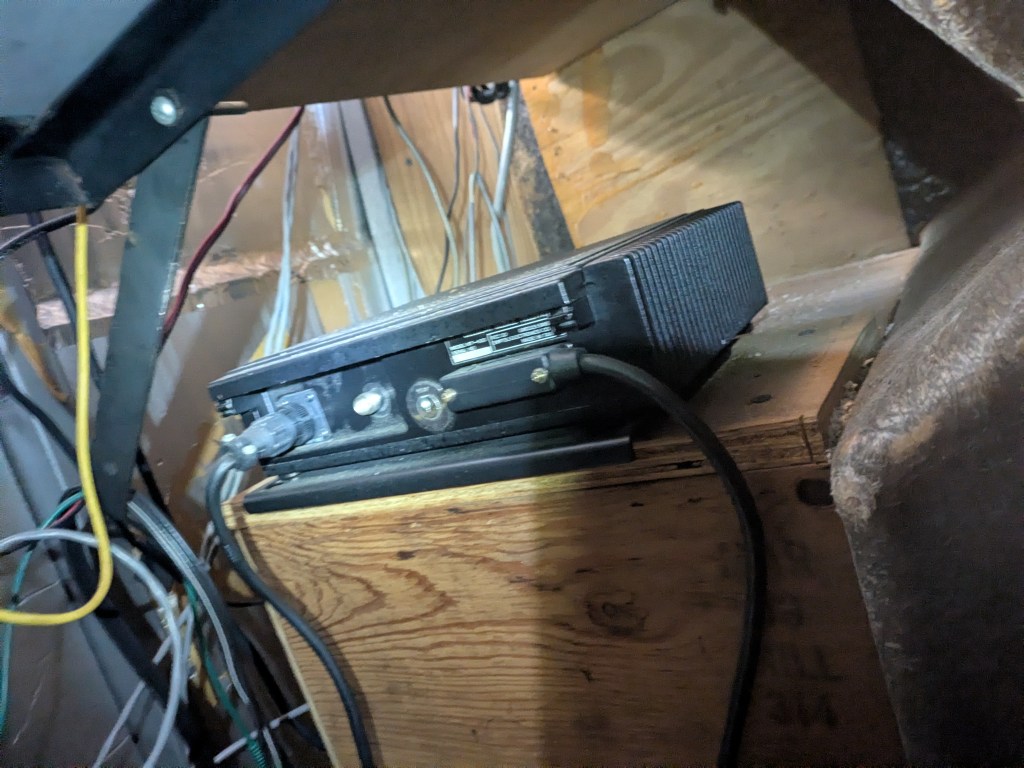
Mixed among the hardware is a tangle of professional headphones and auxiliary speakers used for multi-operator monitoring, alongside a “rat’s nest” of proprietary wiring looms and connectors that have yet to be traced.
It’s a literal puzzle of 1980s tech that will take weeks of sorting to fully document.
 The Vice Van: Hillsborough Files
Leave a comment