Before we can test much of the equipment, we have to verify the “heart” of the operation: the Seatron Power Grid. This van wasn’t powered by a simple cigarette lighter plug; it features a massive, integrated electrical system designed to run a small office’s worth of electronics for hours in total silence.
The Seatron Switchboard: Professional Integration
The center of this audit is the custom Seatron Switchboard. Unlike the dry-rotted radio cords, these heavy-duty toggles have held up remarkably well.
- The Stabilizer System: The “STABILIZER” toggle is a known quality—it operates the system designed to keep the vehicle perfectly still. In a surveillance environment, this prevented the “tell-tale” rocking of the van’s suspension when operators moved in the back, which would have given away their position to anyone watching the exterior.
- Environmental Controls: The “A/C PUMP” and “VENT” switches were the life-support for the detectives. These devices rarely go bad from lack of use, barring any physical damage or corrosion.
The GE Gauges: Pristine Condition
The two large General Electric D-C meters (Volts and Amperes) are in surprisingly good shape.
- Current Status: There is no visible oxidation on the gauges or the faceplates. They appear as clean as the day they were installed.
- The Goal: Despite the clean exterior, we are checking the wiring behind the panels to ensure there’s no obvious damage.
The Power Distribution Box & The “Biohazard”
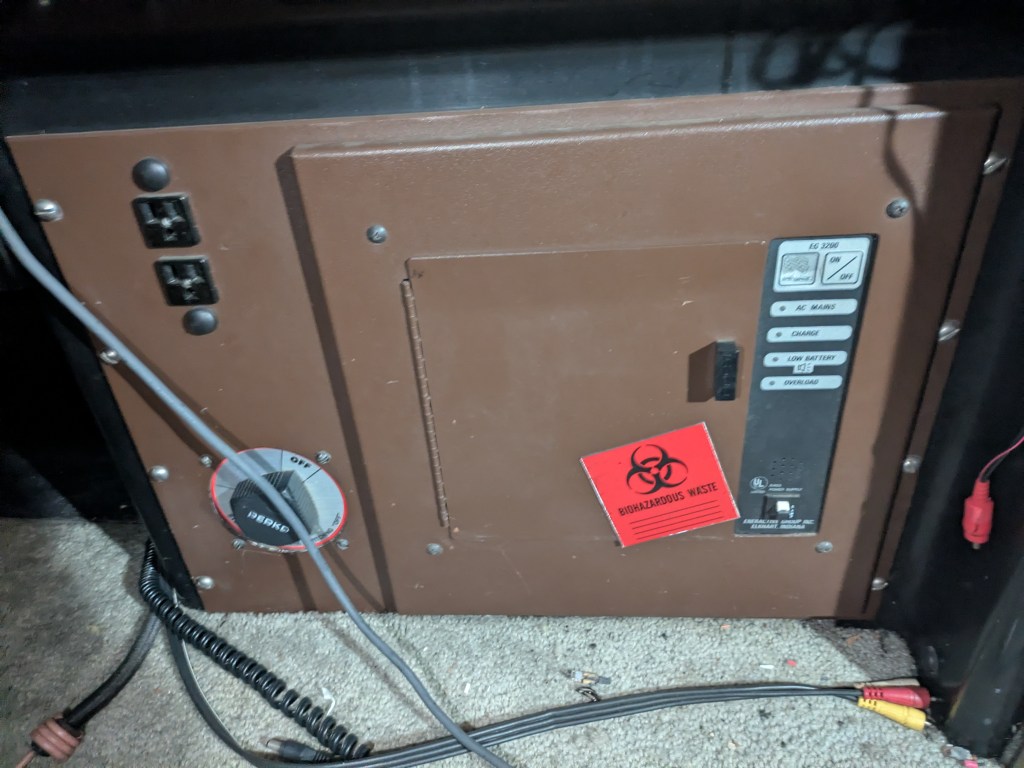
Down near the floor sits the main Power Distribution/Inverter box.
- The “Biohazard” Magnet: A piece of dark squad humor left on the face of the unit.
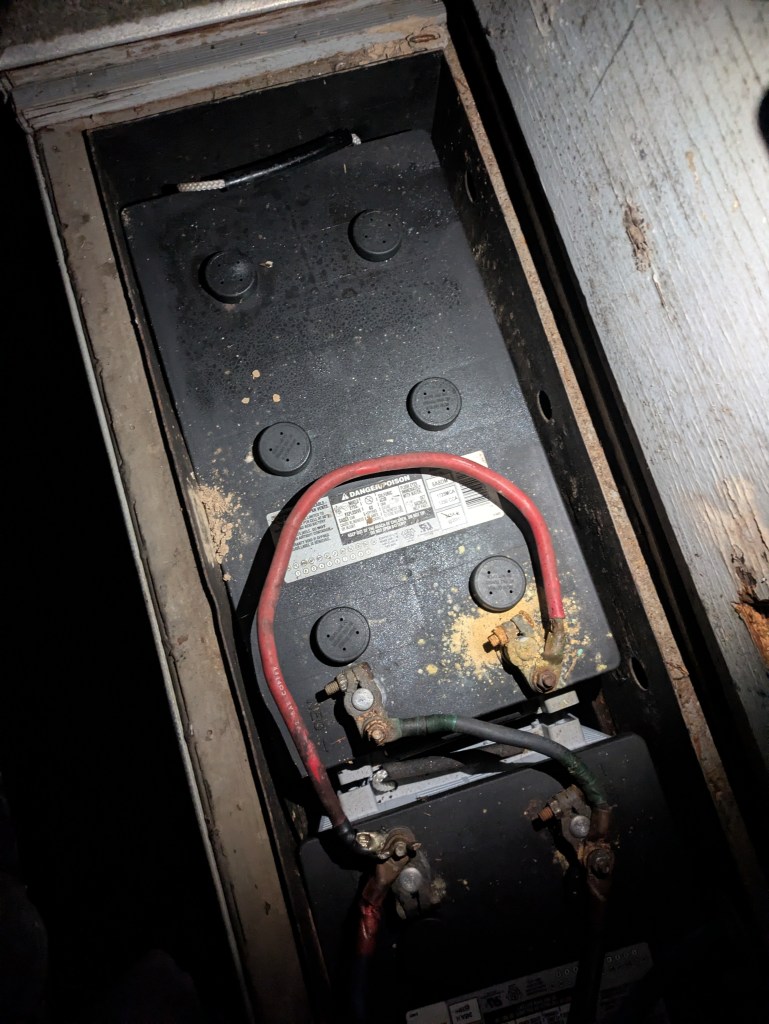
- The Battery Compartment: We’ve located the auxiliary battery compartment in a hidden compartment under the floor, and as suspected the batteries are not usable.
That is a critical piece of the van’s “stealth” infrastructure. It explains how the van could remain active for days in a stationary position without needing to run the engine.
The External Life-Line: Shore Power
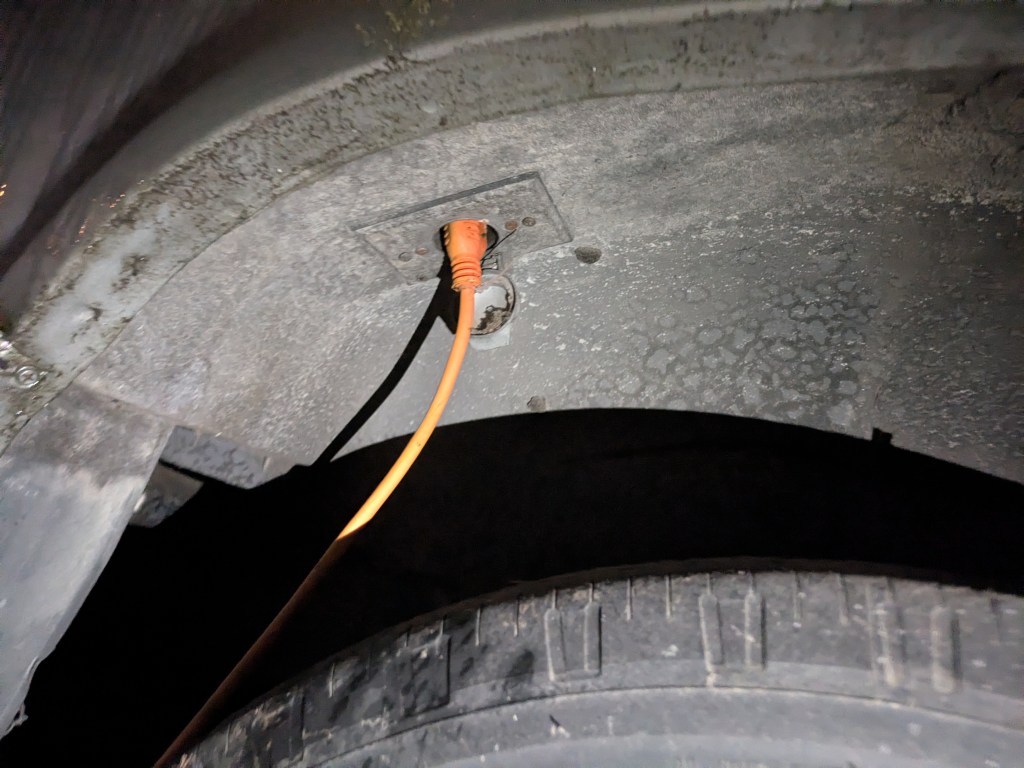
One of the most tactical features of the Seatron conversion is hidden in plain sight. Tucked away inside the driver-side rear wheelwell is a recessed AC power inlet.
- Stealth Charging: This allowed the squad to run a heavy-duty extension cord to a “safe house” or a nearby building. To a passerby, it looks like a mundane service cord for a utility van, but inside, it was providing the 110V AC “Shore Power” needed to keep the racks running and the auxiliary batteries topped off indefinitely.
- The Inverter/Charger Link: This external port feeds directly into the main power distribution box. It allowed the detectives to use the on-board monitors and radios without worrying about the “Amperes” gauge dropping into the red during a multi-day stakeout.
The Power-Up Protocol: Methodical Restoration
We aren’t just hooking up a jump pack and hoping for the best. After 15 years, a “shotgun” approach could lead to a catastrophic short. The strategy is a controlled, bottom-up activation:
- Isolation: Every circuit breaker on the main panel is being flipped to the OFF position. This isolates the sensitive 1980s electronics—the ICOM, the Marantz decks, and the CRTs—from the initial surge.
- The Battery Audit: Initial testing of both the Van (Starter) battery and the House (Auxiliary) battery bank has confirmed what we expected: both are dead and non-recoverable. The van battery will be replaced and connected to a separate battery maintainer, while the house battery will be bypassed during initial testing.
- Shore Power Activation: We will introduce 110V AC through the wheelwell inlet to power up the inverter/charger unit. This will provide a stable DC bus for the rest of the testing.
- Incremental Testing: With the inverter live, we will flip the circuit breakers one at a time. We will be monitoring for shorts and watching the GE Analog Amperes gauge for any sudden, unexpected current draws that indicate a wiring failure.
 The Vice Van: Hillsborough Files
Leave a comment