We’ve proven the “Air Quality” gear works, but a surveillance van that can’t move is just a stationary target. Today, we stepped out of the darkroom and into the engine bay to see if the Ford 351 Windsor V8 is ready to rejoin the force after 15 years in the Tennessee humidity.
The 27,000-Mile Original Engine
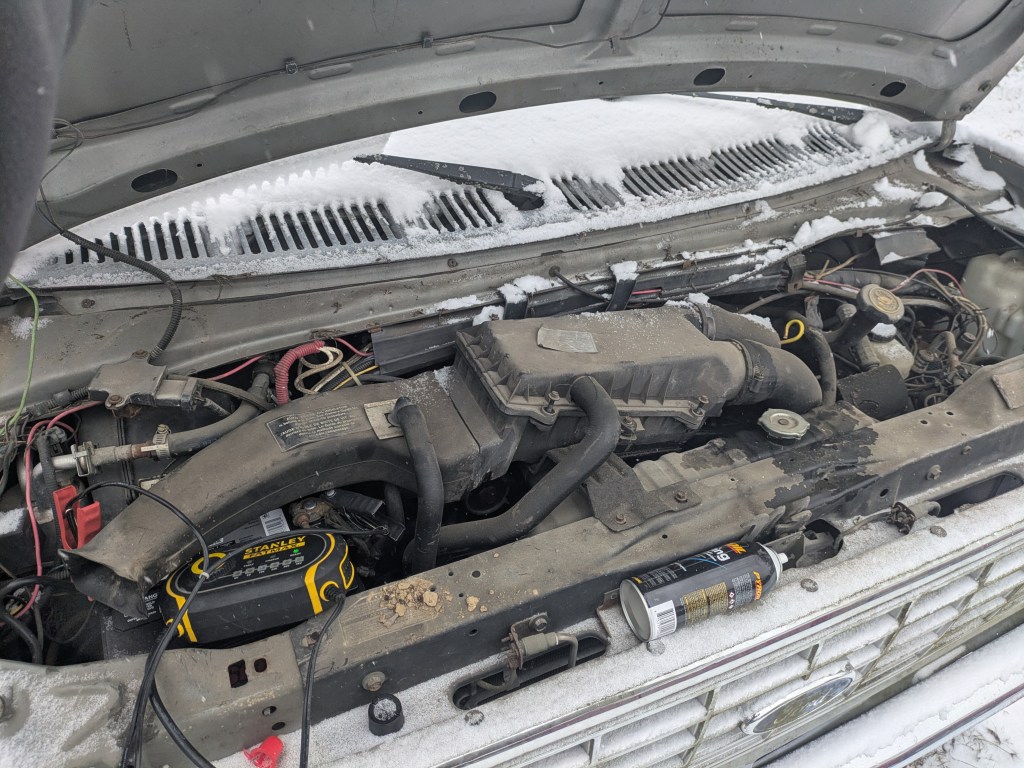
Opening the hood reveals an incredibly well-preserved 351 Windsor. Everything is exactly where the Ford factory—and the Seatron converters—left it.
- The Condition: Aside from a significant accumulation of dust, you would never know this vehicle hadn’t been in use. The air filter is in great condition, and significantly, the battery had been disconnected before the van was put into storage. This intentional step indicates the vehicle wasn’t just parked, it was stored.
- The Fluids: While the engine looks clean, the fluids show the toll of time. The oil on the dipstick is black, and both the coolant and brake fluid levels are low. These will be our first areas of mechanical investigation once we establish that the engine runs.
The Fuel System Strategy
The van has been sitting since 2011 with very little fuel left in the tank. Rather than dropping the tank immediately, we are opting for a more direct test of the existing infrastructure.
- The Plan: We are adding several gallons of fresh gasoline to the tank to fortify whatever remains.
- The Goal: Once the fresh fuel is added, we will cycle the ignition to see if the original fuel pump can prime the system and build adequate fuel pressure at the rail. This will tell us immediately if the pump and lines are still functional.
The “Cold Start” Protocol
Before introducing fuel, we followed a methodical process to ensure the engine was physically capable of turning:
- The Battery: With the original battery disconnected and dead, we installed a fresh heavy-duty battery for the testing phase.
- We connected a battery charger/maintainer to the new battery and powered from a separate shore-power source so we don’t destroy the new battery during testing.
- The “Dry” Crank: We tripped the inertia switch to crank the engine without firing it. The starter engaged strongly, and the engine turned over with a steady, rhythmic cadence.
The Moment of Truth
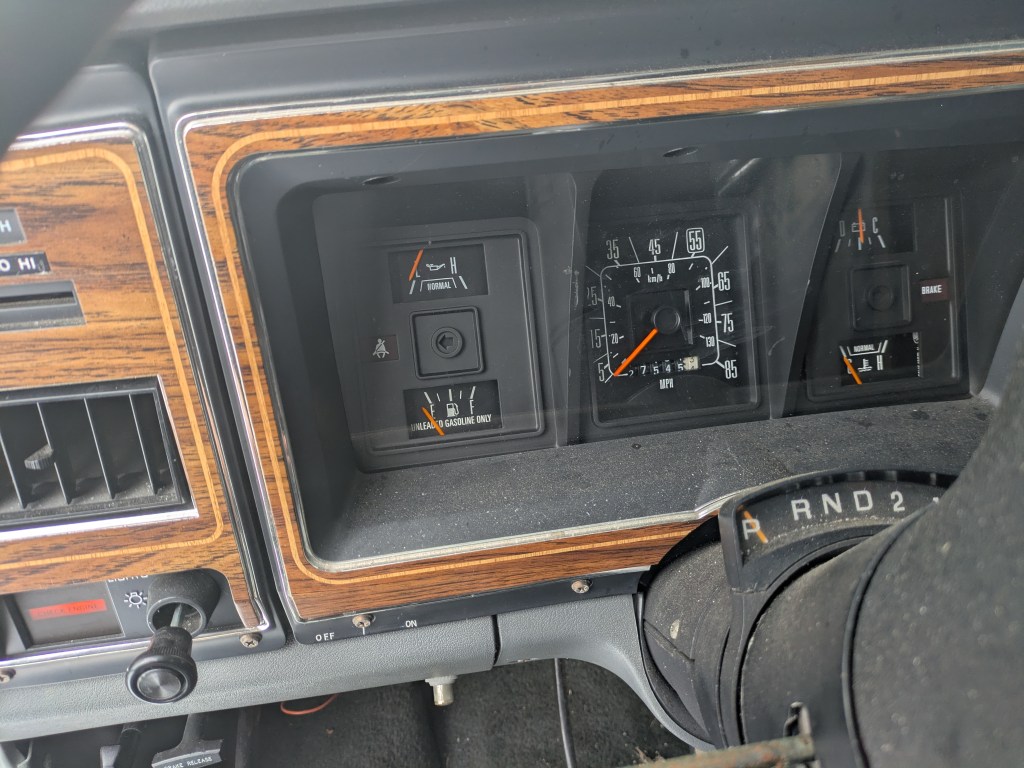
With the fresh fuel added and the battery connected, we reached the final step of the mechanical audit. In a fuel-injected Ford of this era, turning the key to the “ON” position should be met with a distinct, two-second hum of the fuel pumps priming the lines.
We turned the key, and we were met with silence.
The Diagnostic Wall
The engine cranks with strength, but without fuel pressure, it will not fire. We are now in a diagnostic standoff. Because this is a specialized surveillance vehicle, the “Standard Ford” troubleshooting guide only goes so far. We are currently investigating three potential points of failure:
- The Dual-Pump System: We have to determine if the low-pressure lift pump inside the fuel tank has seized, or if the high-pressure pump mounted on the frame rail is the culprit after 15 years of sitting.
- Electrical Continuity: We are checking for the basics—blown fuses or a seized fuel pump relay. Given how well-preserved the engine bay is, we’re looking for a clean electrical failure rather than wiring damage.
- The Alarm Interlock: This is the wildcard. The AutoPage 4242 alarm system is integrated into the van’s vitals. It is possible that a security interlock or a “kill switch” is preventing the fuel pump relay from triggering.
Next Steps: Chasing the Signal
The 351 Windsor is ready to run, but until we solve the mystery of the silent prime, it remains a 27,000-mile display piece.
 The Vice Van: Hillsborough Files
Leave a comment