The Technical Handshake
The investigation into the van’s “no-start” condition took a major turn recently. I managed to get in touch with a former detective intimately familiar with the unit. He provided the first piece of “living” intel: the van was likely equipped with a kill switch and a dedicated push-button under the dash designed to jump-start the engine using the house batteries.
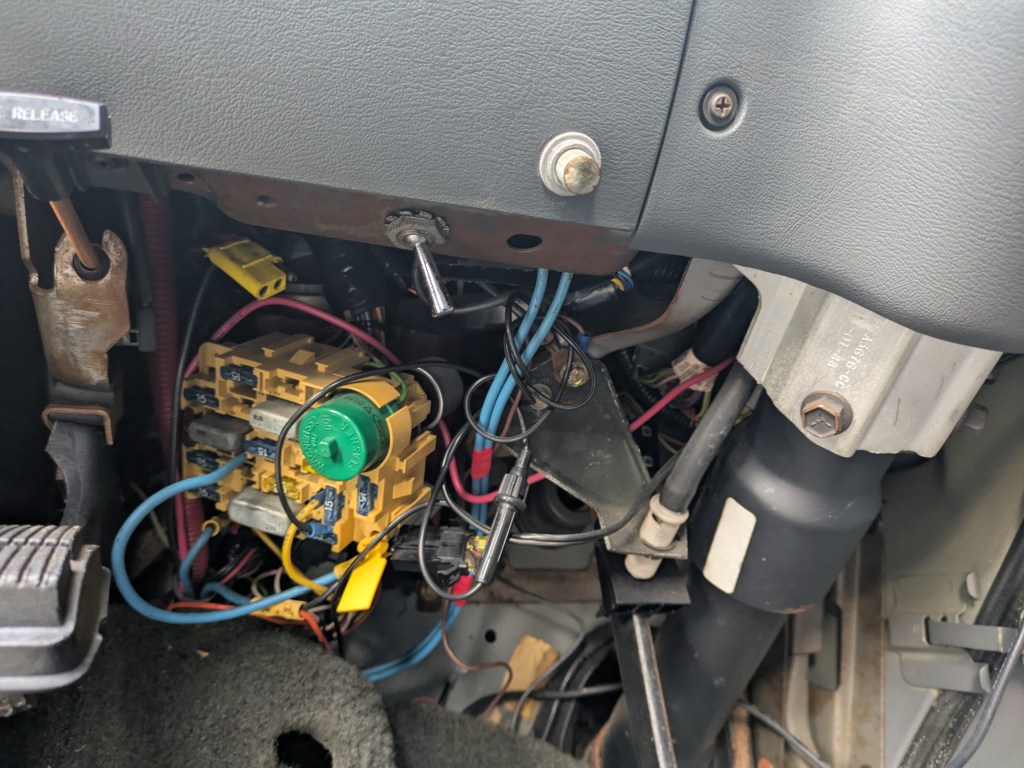
With a lead on the electrical layout, I began at the dash switch and started the painstaking process of following the “nest” back through multiple terminal strips and vintage electronics.
The Routing Investigation
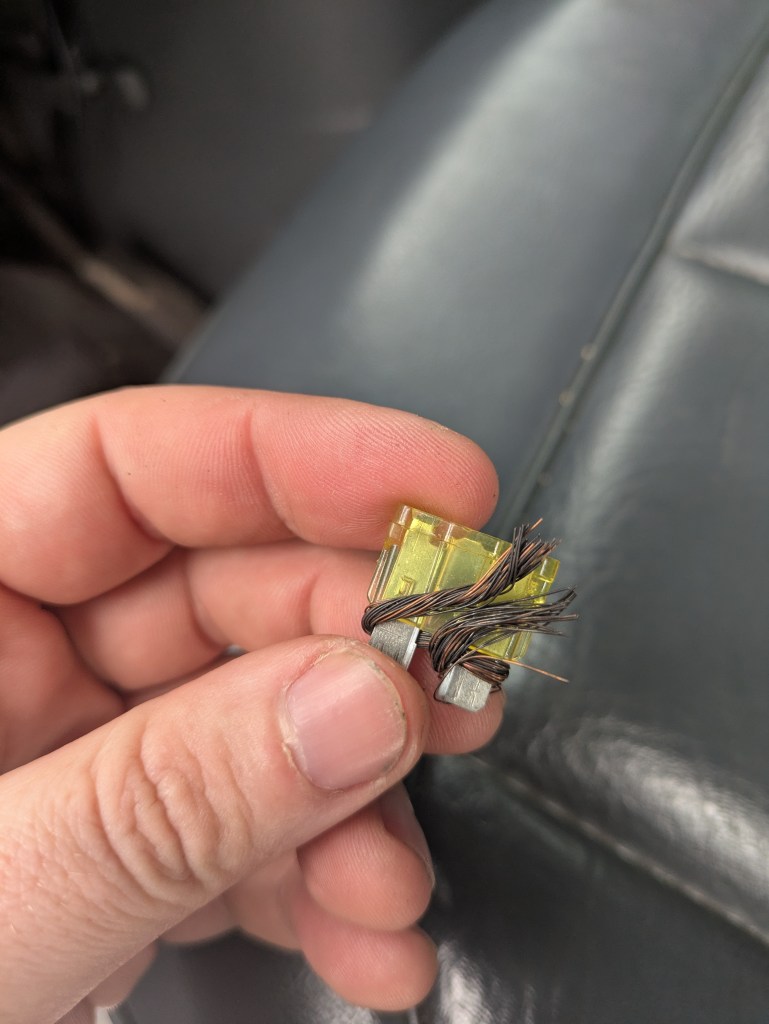
Before moving to the van’s harnesses, I started with the basics: I checked the inertia switch and its associated wiring to ensure the safety impact-cutoff hadn’t been triggered or failed. I also located a highly suspect fuse—wrapped with copper and out of place—that is currently marked for further investigation.
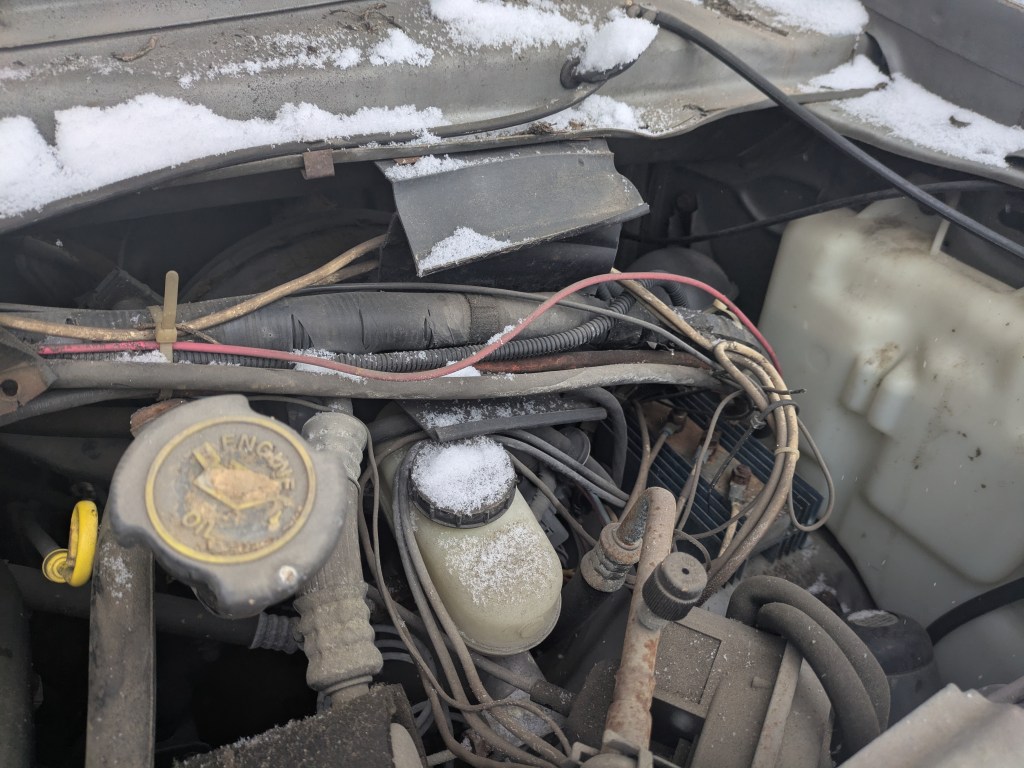
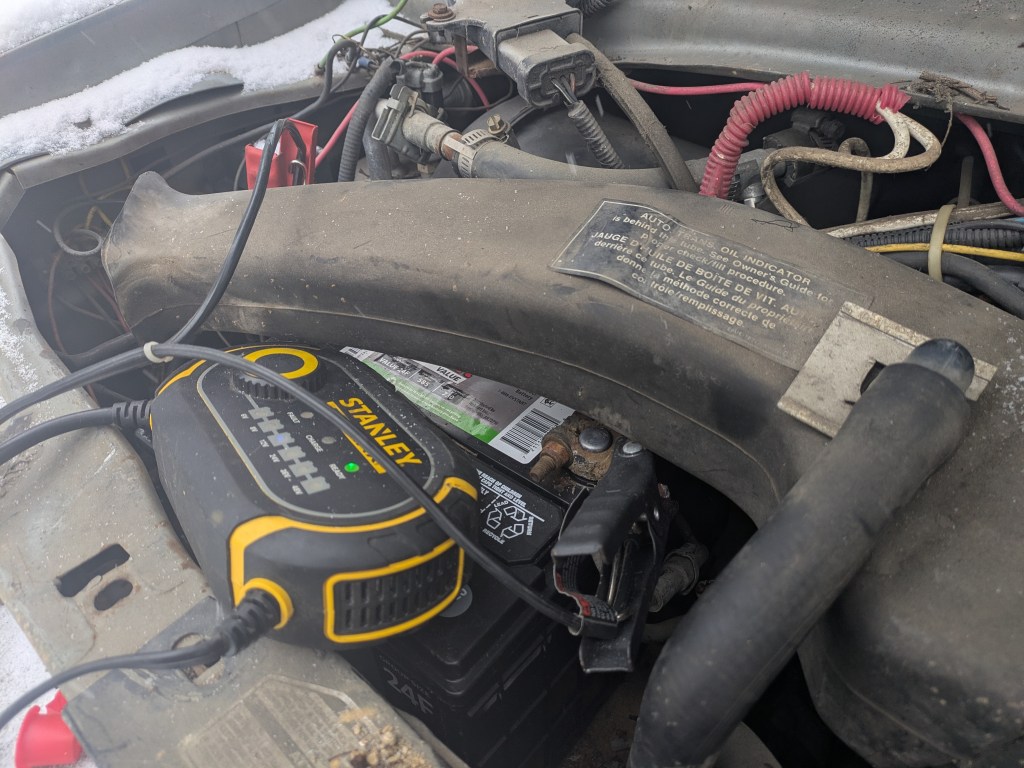
I initially traced the wiring toward the rear of the cab. After confirming the lines did not lead directly to the fuel pump, I shifted my focus forward. I followed the harnesses through the firewall, across the engine bay, and toward the primary battery. Off the solenoid, I navigated a dense cluster of wires on the passenger side. There, hidden in a tangle of loose-hanging leads, I finally found it: The Fuel Pump Relay.
First Breath
Hoping for the best, I pulled the relay and bypassed it with a jumper wire. Immediately, I heard the distinctive hum of the fuel pump priming. With life in the lines, I added a gallon of fresh gas and turned the key.
The engine stumbled and sputtered at first—clearing out twelve years of dormancy—before finally roaring to life. The idle was remarkably smooth. No knocking, no ticking, just the steady rhythm of a Ford 351 that had been waiting over a decade to speak. While idling, I performed a basic systems check:
- Transmission: Verified engagement in both Reverse and Drive.
- Cooling: Added just over 2 gallons of antifreeze to the radiator.
- Braking: Added a full bottle of brake fluid to the master cylinder.
- Note: Leaks are highly probable given the volume of fluid added; further monitoring is required.
The Verdict
After idling for several minutes and approaching operating temperature, the engine stumbled and died. A quick burst of starting fluid brought it right back to life, narrowing our failure down to two possibilities:
- System Degradation: The fuel lines or filters are so heavily plugged they’ve finally choked out.
- The “Dry Storage” Theory: The van was stored with an empty tank—highly possible if the storage was as planned as I believe it was.
If the van was stored dry, it is an absolute mechanical win—it explains why the pump hasn’t seized or turned to varnish. However, we have a new mystery: while bypassing the relay worked, we now need to know if the relay itself has gone bad, or if there’s another electronic interlock hidden in the surveillance gear keeping the van from activating it.
The easiest way to determine if we have a fuel line problem or a lack of fuel: 5 gallons of high-octane fuel and a heavy dose of system cleaner are on the way.
The Vice Van is officially alive. Now we see if it stays that way.


Leave a comment