The Easy Fix Falls Short
In any investigation, you start with the most likely suspect. We replaced the thermostat first—a quick, inexpensive, and logical starting point for a vehicle that has been dormant for twelve years. Unfortunately, the “easy fix” didn’t solve the problem. Despite the new hardware, the 351 Windsor continues to climb toward critical temperatures within minutes of idling.
Forensic Temperature Mapping
To narrow down the failure, we verified the system was fully topped off with coolant and performed a “burp” to ensure no air pockets were trapped in the block. We then broke out the non-contact infrared thermometer to check the heat flow.
The data was conclusive:
- Inlet: The top of the radiator rapidly climbed to 230°F.
- Outlet: The bottom radiator hose remained at a stagnant 34°F (Outside temperature was approximately 24°F).
The Diagnosis: Total Obstruction
This massive temperature differential confirms that while hot coolant is reaching the top of the radiator, it isn’t moving through the core to the bottom. We’ve ruled out several other variables:
- The Water Pump: We observed active air bubbles and movement during the filling process, indicating the pump is mechanically spinning and attempting to move fluid.
- Airflow: The radiator fan is clearly engaging and spinning as designed.
- Thermostat: We visually inspected the thermostat with no obvious issues, and replaced it with a new one as a precaution.
Given that the van was extremely low on coolant when we first recovered it, it is highly likely that years of internal corrosion and scale have completely blocked the radiator core. The system is essentially a closed loop that has been capped off internally.
Next Steps
The verdict is in: the radiator is functionally a brick. We are now at a crossroads: attempt a flush to see if the blockage can be broken loose, or move straight to a full radiator replacement. Additionally, we still have no cab heat – Which begs the question: Is the heater core also blocked? Or is the radiator alone causing the entire system to stay stagnant? There’s only one way to find out.
The “While We’re In There” Reality
As it turns out, the radiator wasn’t the only casualty of a twelve-year slumber. Once we pulled the old unit, it became clear that the water pump—which we initially thought was moving fluid—was functionally compromised. The antifreeze had broken down to the point the outlet was completely blocked, and couldn’t be opened with a screwdriver or a water hose.
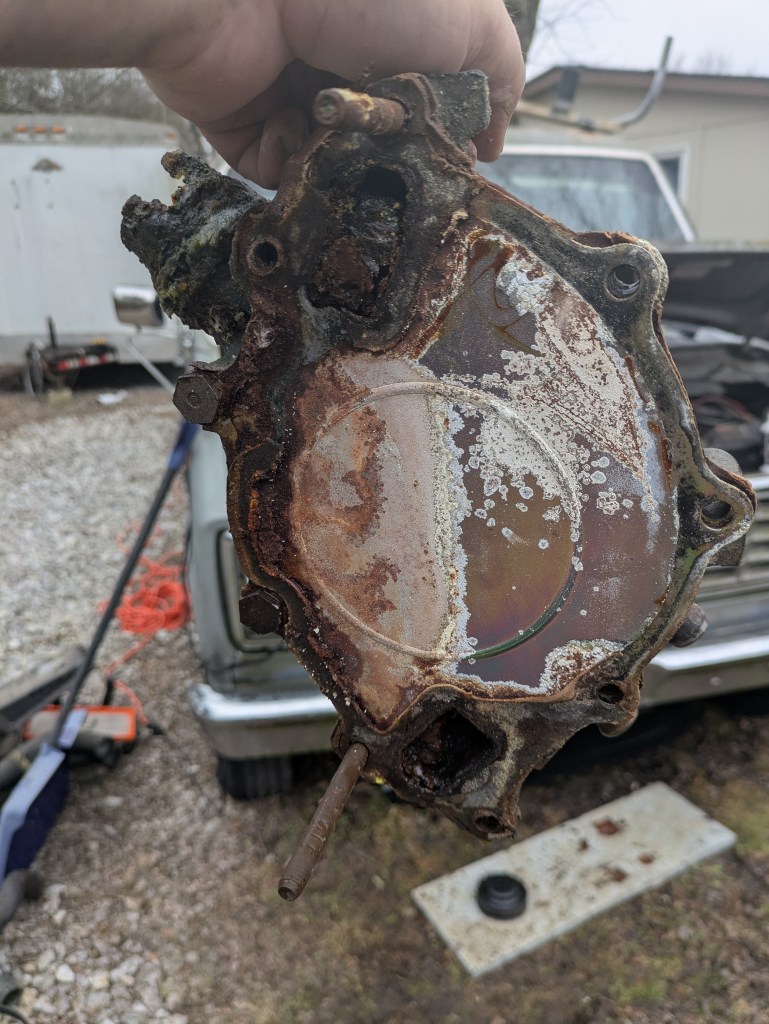
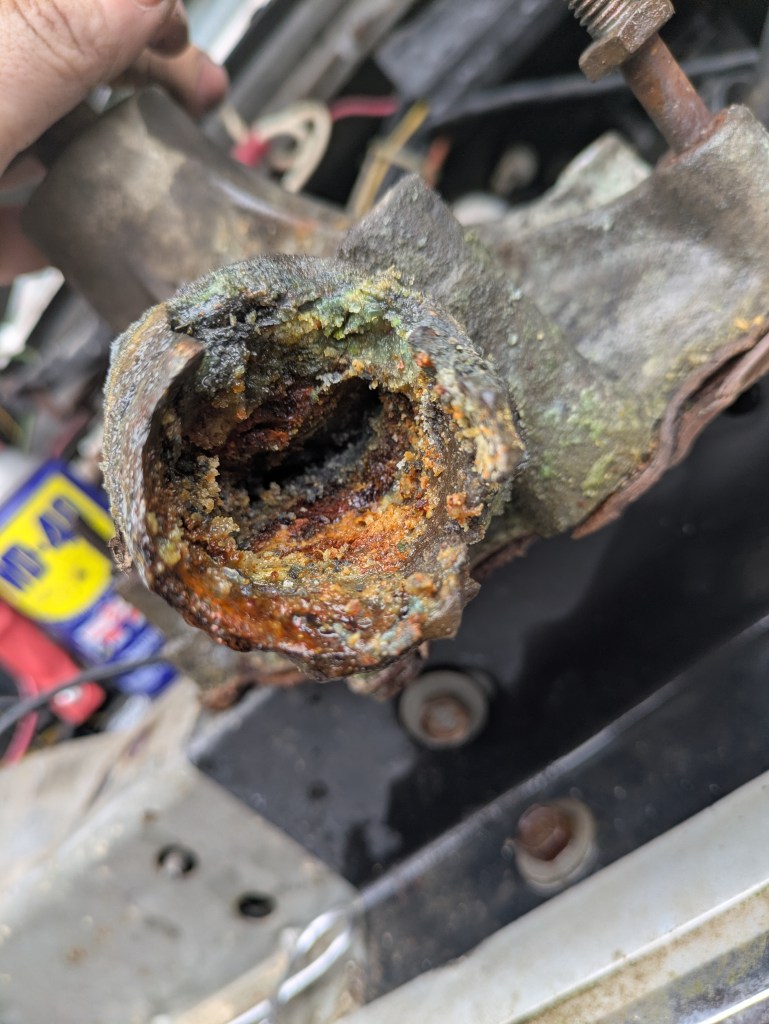
We doubled down, installing a new water pump and a fresh coolant temperature sensor to ensure the computer and the gauge were actually speaking the same language.
From Overheating to Going Dark
With a new radiator, pump, and sensor, plus flushing the heater core both directions, the 351 Windsor finally has a circulatory system that works. The “burp” appeared to be successful, the thermostat opened on cue, and for the first time in over a decade, the van sat at a smooth, stable idle. We watched the needle climb steadily toward operating temperature, expecting a victory lap.
Then, the Vice Van reminded us who’s in charge.
Just as the engine reached its sweet spot, it stumbled briefly and died. She immediately started back up, before dying again.
The Next Mystery: The Ghost in the Machine
We’ve conquered the fire (overheating), but now we’re chasing a ghost. Is it a heat-soaked ignition module? A fuel delivery issue triggered by the warm-up cycle? Or perhaps a sensor that only fails once the block reaches a certain thermal threshold?
The cooling system is finally healthy, but the Vice Van clearly isn’t ready to leave the driveway just yet. The investigation continues.


Leave a comment