With the Vice Van now “mobile” and the interior “eyes” watching us, we’ve returned our focus to the 351 Windsor’s refusal to stay running. We have reached a crossroads in the investigation. Rather than chasing a single ghost through a maze of thirty-year-old wiring, we’ve decided to clear the board.
The Strategy: Systemic Renewal
We aren’t indiscriminately throwing parts at the problem; we are performing a strategic replacement of every high-probability failure point. After twelve years of dormancy, components like sensors and diaphragms don’t just “wear out”—they degrade chemically and mechanically. To find our culprit, we are removing the suspects one by one.
The Parts Manifest Our overhaul is targeting the three pillars of internal combustion: Air, Spark, and Fuel.
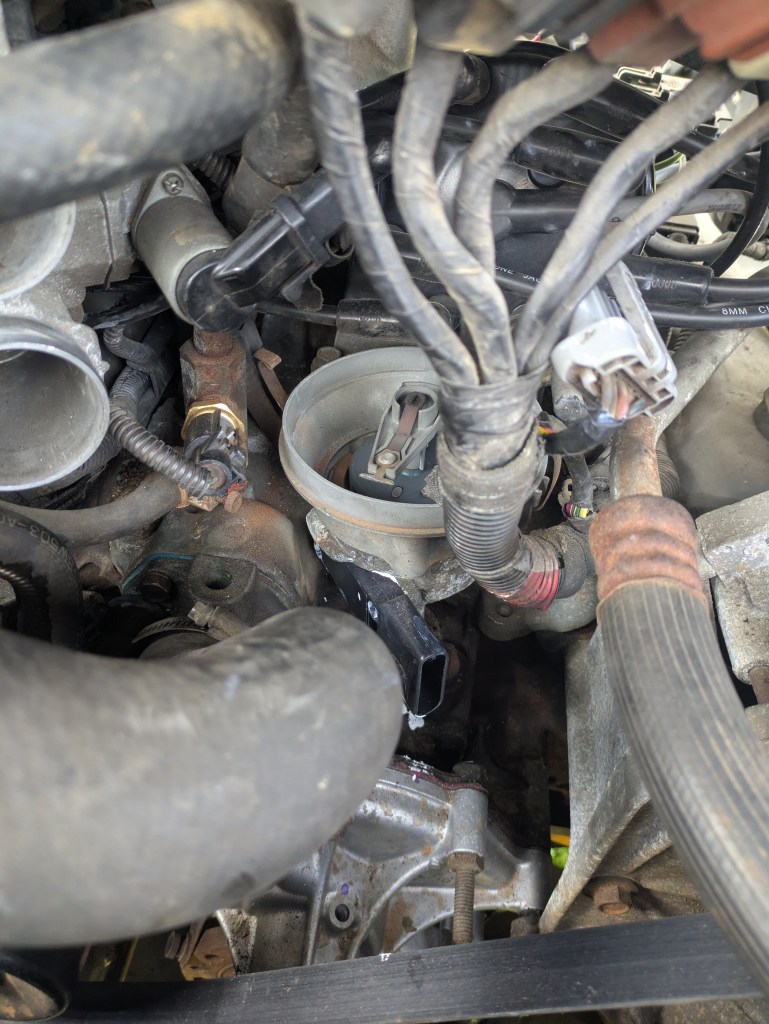
- The Ignition Suite: To resolve the “dies when warm” symptom, we are replacing the entire ignition path. This includes a new distributor, Ignition Control Module (ICM), ignition coil, spark plugs, and wires. If the spark is failing due to heat-soak, this will bury that problem for good.
- The Sensor Array: To ensure the computer is getting clean data, we’re installing a new MAP (Manifold Absolute Pressure) sensor and IAT (Intake Air Temperature) sensor.
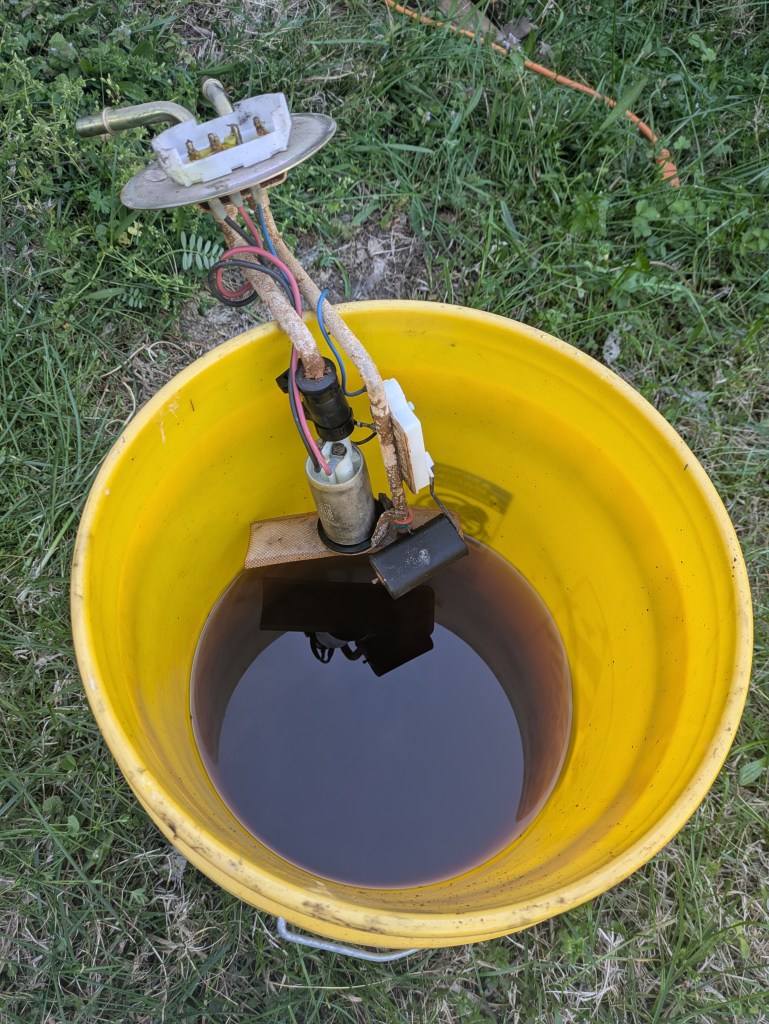
- Fuel Delivery: Knowing the fuel has had over a decade to varnish and corrode, we are replacing the fuel pumps, fuel filters, and the fuel pressure regulator.
- Maintenance Essentials: A fresh air filter is going in, and while the serpentine belt looks remarkably well-preserved, we are retiring it due to age. Rubber has a memory, and twelve years is a long time to remember being still.
The Alternator Anomaly
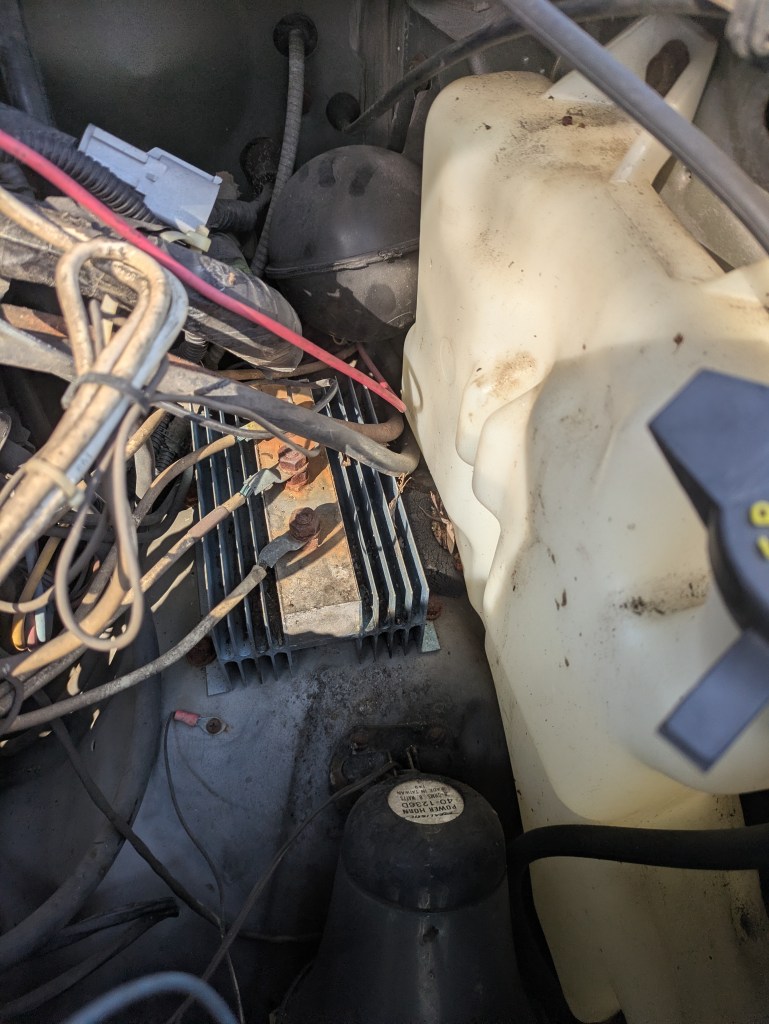
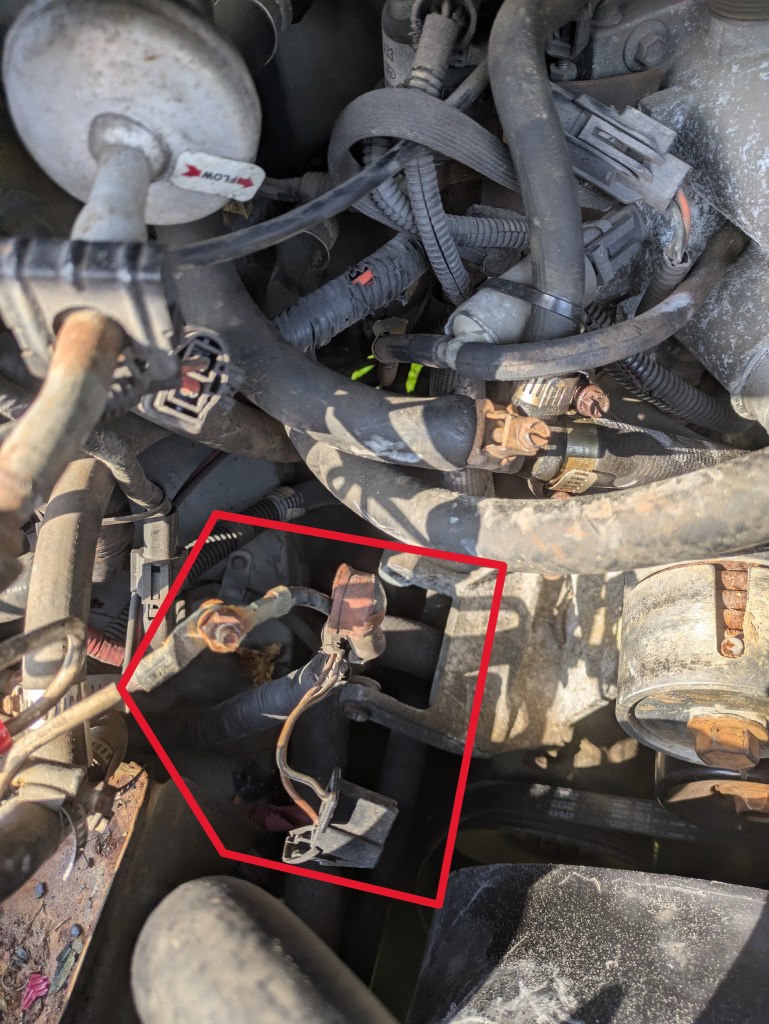
During our brief “First Flight” test, we uncovered a new piece of evidence: the alternator is dead. It isn’t providing a charge to the system, which adds another layer of instability to the engine’s electronics. A new alternator, along with a wiring pigtail and voltage regulator, are slated for installation to ensure the system has the 14 volts it needs to think clearly.
The goal is simple: eliminate every possible “maybe” until the only thing left is a running engine.
The Verdict
The “shotgun” approach, while intensive, proved to be the correct forensic path. After the final connection was tightened and the timing was set, the Vice Van roared to life.
For the first time in over a decade, the 351 Windsor sat at a smooth, stable idle. We monitored the gauges and let it run for over an hour—no stumbles, no overheating, and crucially, no “abrupt dying.” The ghost in the machine has been exorcised – at least for now.
Interestingly enough – the fuel pump relay stopped working again, and it was full of water when we pulled it off. A replacement, along with a relocation, is coming soon.
The Vice Van isn’t just a project anymore; it’s a running, breathing machine. We’ve conquered the cooling, the fuel, and the fire. Now, it’s time to figure out how to make it stop.


Leave a comment