With the engine finally holding a steady idle, we pivoted our focus toward making the Vice Van street-legal. The goal was simple: move the investigation from the driveway to the open road.
Establishing Control
The first priority was the braking system. The pedal, which had previously been “just a suggestion,” was completely non-responsive. We performed a full system bleed, purging years of air and degraded fluid. The result was a success—the pedal regained its firmness, and for the first time in twelve years, the van has the mechanical capacity to stop.
To complement the newfound stopping power, we addressed the rear tires. Replacing the dry-rotted rubber with a fresh set ensures we aren’t courting a blowout on our first outing. With the mechanical safety checked and the insurance and registration officially updated, the Vice Van is—on paper—ready for the roadway.
The Relay Retrofit
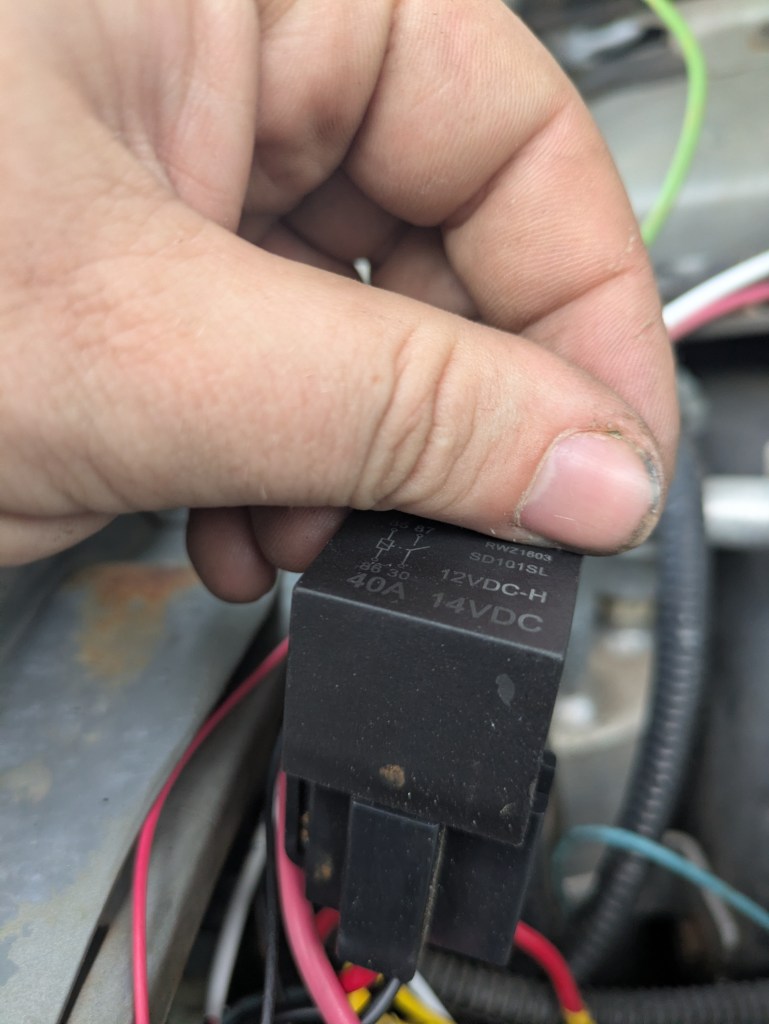
Before the final test, we addressed a lingering electrical suspect: the fuel pump relay. The original proprietary Ford relay was not only expensive but notoriously difficult to source in a pinch. With some help from our friends at a nearby shop, we elected to cut the vehicle harness and convert the system to a standard, “off-the-shelf” Bosch-style relay. It’s a cheaper, more reliable solution that ensures if the pump loses power on the road, a replacement is only as far as the nearest auto parts store.
The Thermal Event
Before attempting a maiden voyage, we elected to perform one final stress test: an extended idle to monitor for heat-soak or fluid leaks. For two hours, the 351 Windsor sat perfectly.
Then, the Vice Van reminded us that “new” does not always mean “reliable.”
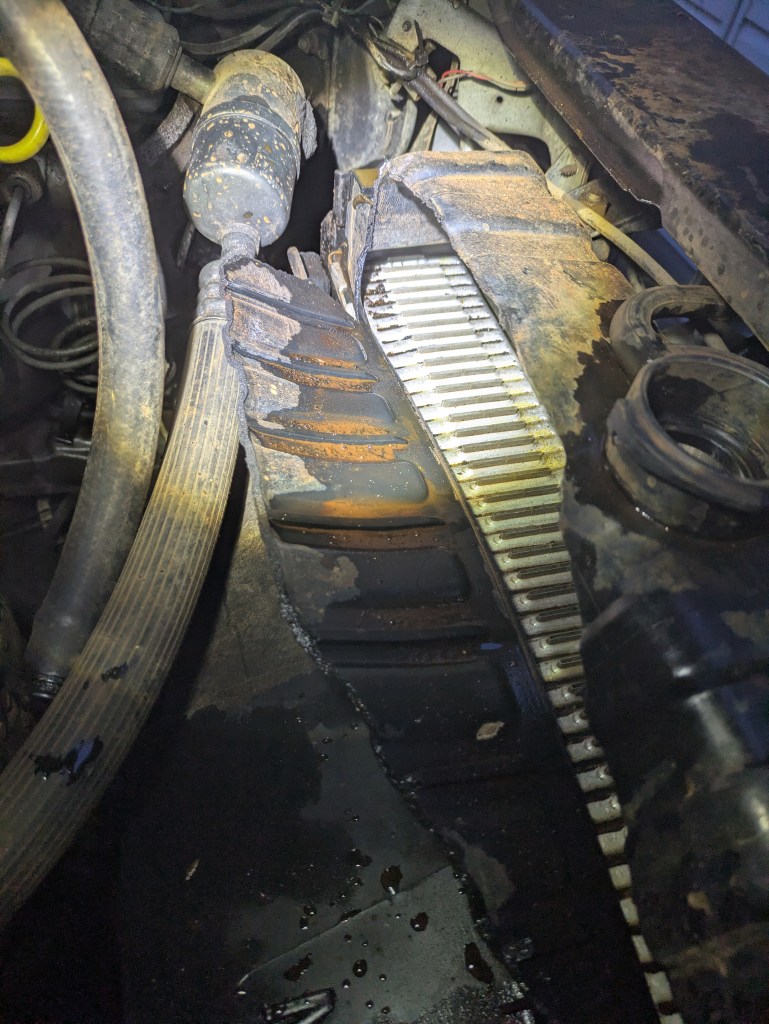
Without warning, the radiator suffered a catastrophic failure. The plastic tank burst apart violently, spraying pressurized coolant across the engine bay and down the exterior of the van. While the engine didn’t show signs of a traditional overheat prior to the pop, the “wholesaler closeout” unit clearly couldn’t handle the long-term pressure of a heat-soaked Windsor.
Back to the Drawing Board
The investigation into the cooling system has been reopened. We’ve cleaned the “coolant bath” off the van and are moving to a more robust setup. Our revised strategy includes:
- Current-Production Radiator: We’ve moved away from discontinued stock in favor of a slightly more expensive unit that is still actively manufactured.
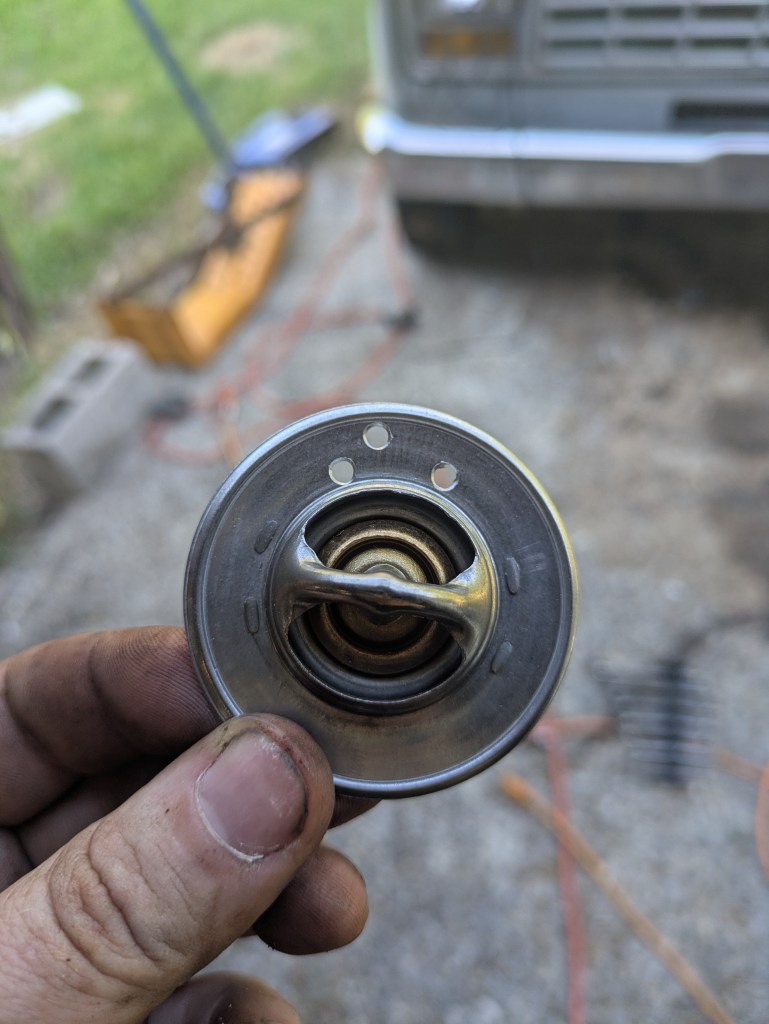
- Thermostat Modification: We are installing a “fail-safe” thermostat, but with a tactical modification: we drilled a small bleed hole in it to allow air to escape the block more efficiently during the fill process.
- Rubber Overhaul: Replacing the aged coolant hoses that were likely stressed by the pressure spike.
- Data Accuracy: During the idle test, we noted the factory dash gauge was reporting lower than expected. To eliminate the guesswork, we are adding an auxiliary digital temperature gauge to monitor the Windsor’s actual thermal state in real-time.
The Verdict
The Vice Van is street legal, but it isn’t street ready. We’ve conquered the brakes and the bureaucracy, but the cooling system has proven it still has teeth. The explosion was a setback, but better to happen in the driveway than five miles into our first test drive.
We are clearing the debris and reinforcing the system. The investigation continues.


Leave a comment