With the cooling system overhauled—take two—we returned to the driveway for another round of endurance testing. The results were initially promising: the 351 Windsor reached 185°F quickly and sat there for a solid hour, rock steady. We called it a night, letting the van cool down completely before a second verification idle the following morning.
The First Mile
The next morning, the van reached operating temperature without incident. For the first time in over a decade, the Vice Van saw the open road.
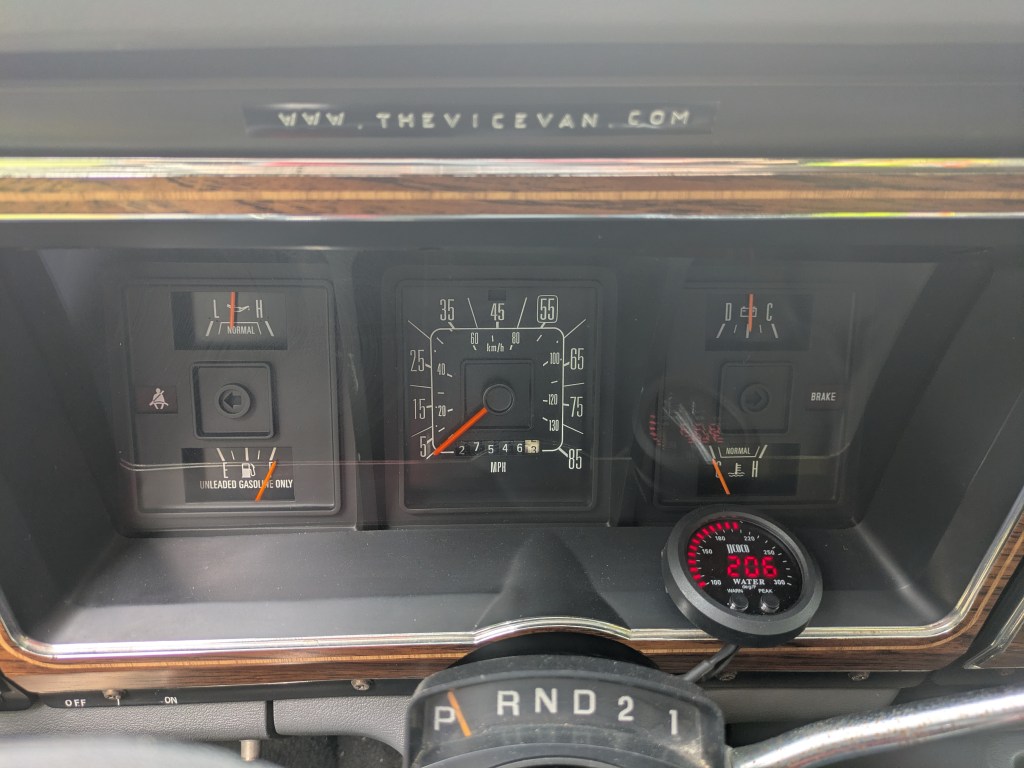
We took a brief, cautious trip to a nearby gas station to fill the tank with fresh 93 octane. During the transit, the van performed remarkably well. It reached highway speeds without hesitation, and the three-speed automatic transmission shifted smoothly. The steering felt responsive and tight, though the overall handling remains a nostalgic reminder of 1980s suspension tech.
However, the van had one more surprise at the pump. Right as the tank topped off, we heard the splash of gasoline hitting the pavement. We have a fresh leak to investigate—likely a dry-rotted filler neck or vent hose—but for the moment, we had a full tank and a running engine.
The Creeping Needle
Upon returning, the temperature began a slow, steady creep upward. When the digital gauge hit 220°F, we cut the ignition. We initially suspected the fan clutch, which spun freely even at operating temp. Replacing it helped, but it wasn’t the “silver bullet.” We even doubled down by adding auxiliary cooling fans and a larger transmission cooler to move more heat, but the needle still refused to stay down.
The Forensic Discovery: Chocolate Milk
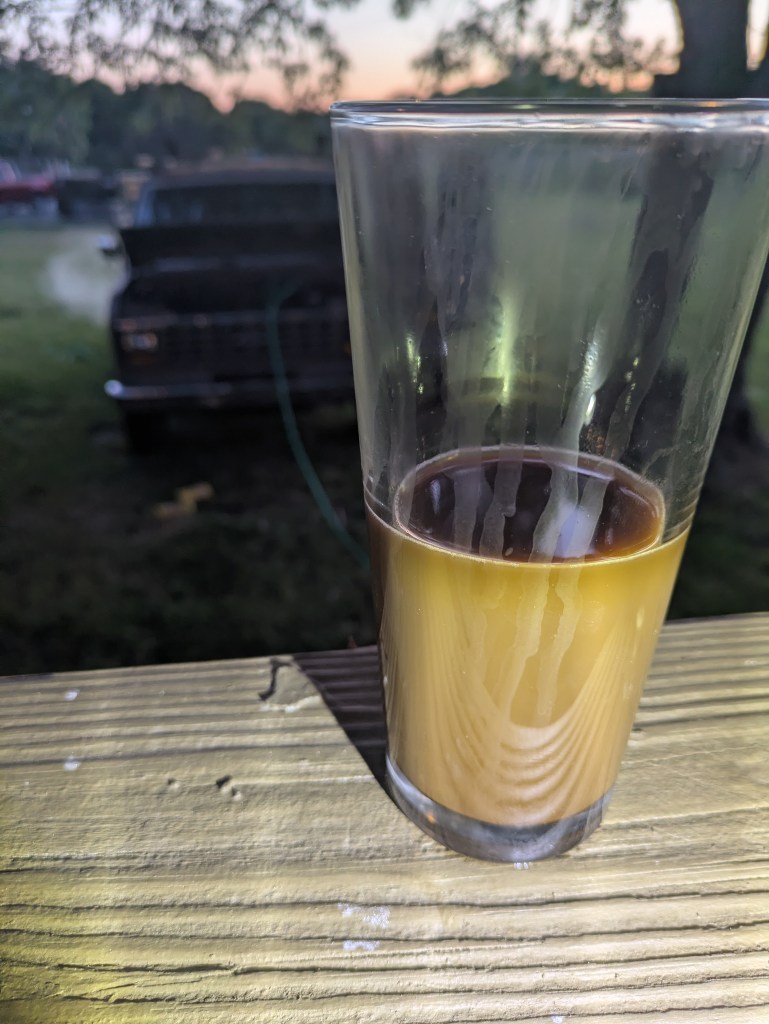
We noted an alarming detail: despite being a nearly new system, the coolant was already filthy. When the radiator had exploded in the previous installment, it revealed a dark brown sludge. We began a series of flushes with clean water, which immediately turned the color of chocolate milk.
The diagnosis was clear: twelve years of dormancy had allowed a massive buildup of rust and scale inside the engine block. The radiator wasn’t failing; it was being insulated by a layer of internal decay.
The Chemical Solution
After several water flushes, we deployed two doses of Thermocure. The effect was immediate. The water, which had finally started to clear, turned rusty again as the solution began dissolving the scale. Over the course of several days, we cautiously ran the van to operating temperature and let it cool back down, allowing the chemicals to eat through the block’s internal “crust.”
It is worth noting that during these high-heat cycles, our brand-new fail-safe thermostat did exactly what it was marketed to do: it got too hot and locked itself in the open position. While it’s technically “broken,” it’s currently a benefit. We’ll eventually replace it with a high-quality OEM-temp unit, but for now, the constant flow is helping the cleaning process.
The Verdict: Street Ready
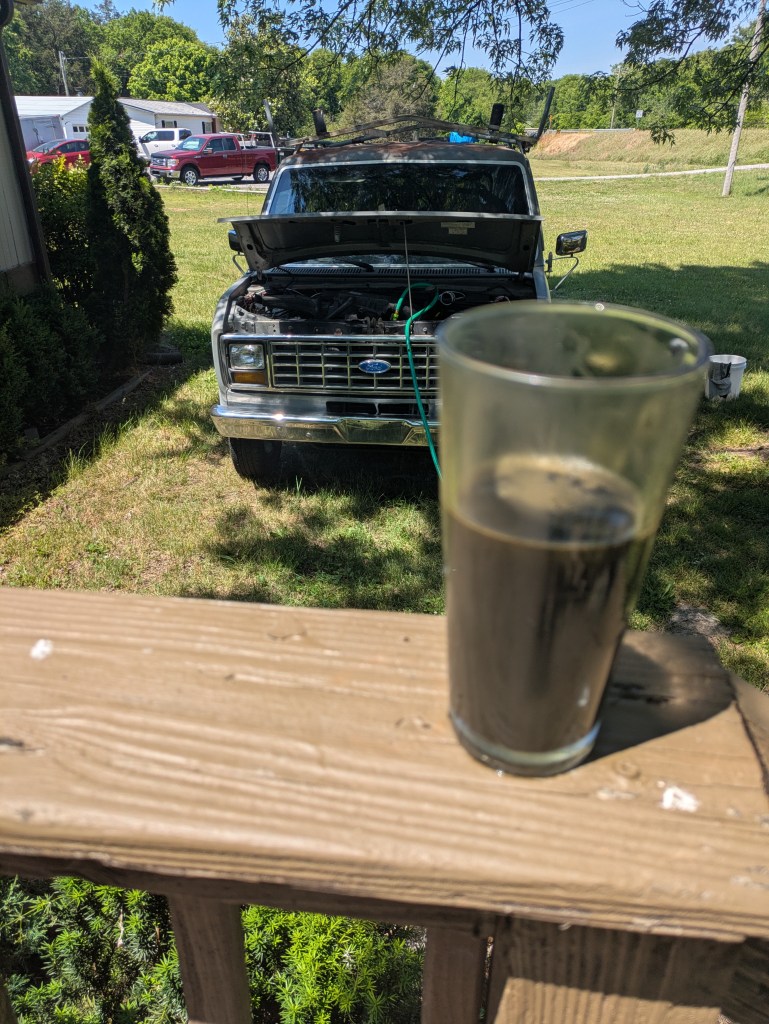
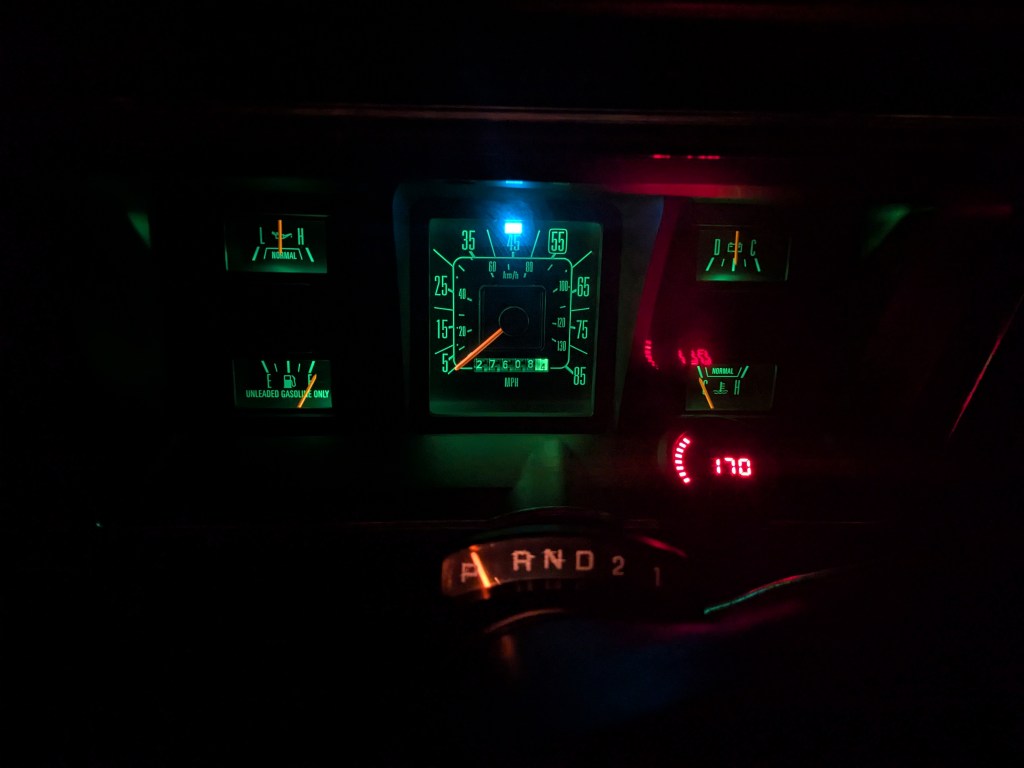
The results were definitive. After a final series of flushes, the “chocolate milk” was gone. We took the van on a 12-mile night run with zero issues, followed by nearly 30 miles the next day in the direct sun. The temperature held steady. The coolant is now looking more like “apple juice” and less like sludge—a massive victory.
We’ve filled the system with clean water and a Blue Devil flush solution to let it soak for several more days, ensuring every last bit of rust is dissolved. The Vice Van has finally found its cool.


Leave a comment