Every mechanical fix we perform on this 1989 Ford Econoline is an act of historical forensic restoration. When we patch a wire or trace an old relay, we aren’t just fixing a van—we are preserving an instrument of leverage.
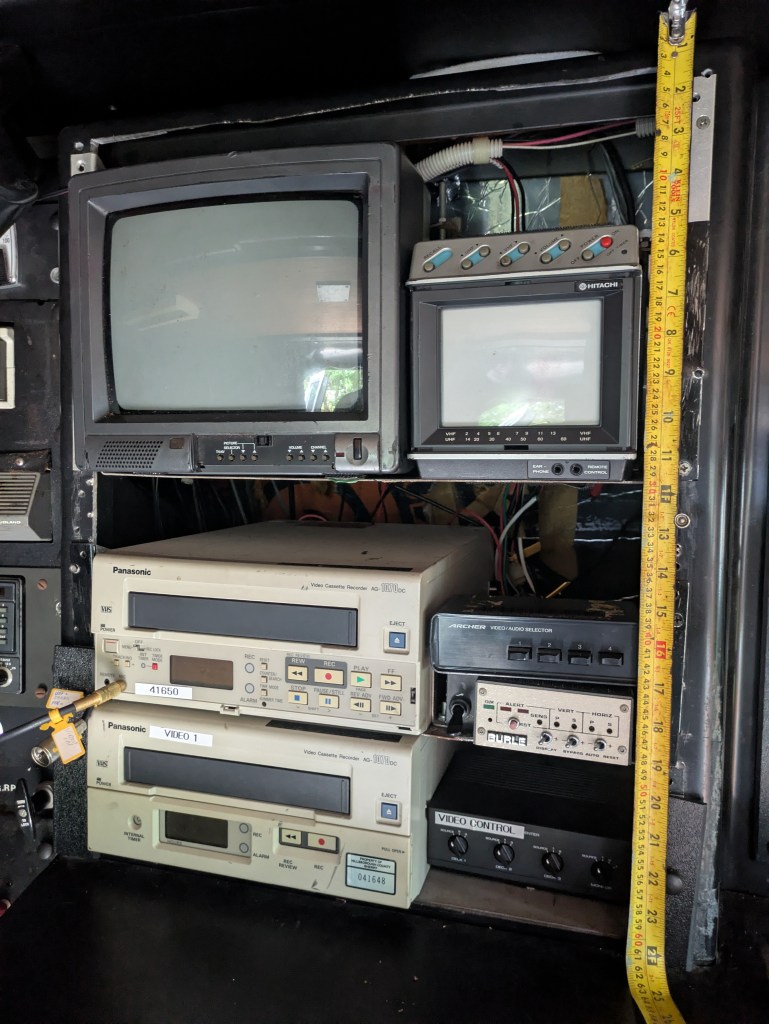
Inside a late-1980s undercover surveillance vehicle, the equipment rack is the spine of the entire operation. It houses the power distribution panels, video recording decks, audio receivers, and signal routing controls. Decades of wear, moisture, and utility modifications left our original rack structures functional, but scarred.
The Engineering Strategy: Form Meets Utility
Surveillance upfitters in the late 1980s like Seatron International didn’t use off-the-shelf consumer enclosures. They built rugged, modular steel and aluminum cages designed to withstand constant vehicle vibration, high thermal loads, and heavy physical abuse.
Restoring these racks requires a two-part approach:
- Structural Integrity: Replacing damaged parts and securing loose equipment.
- Custom Faceplates: Designing custom plates to cover open rack spaces and provide a clean, unified surface.
Completing the Visual Architecture
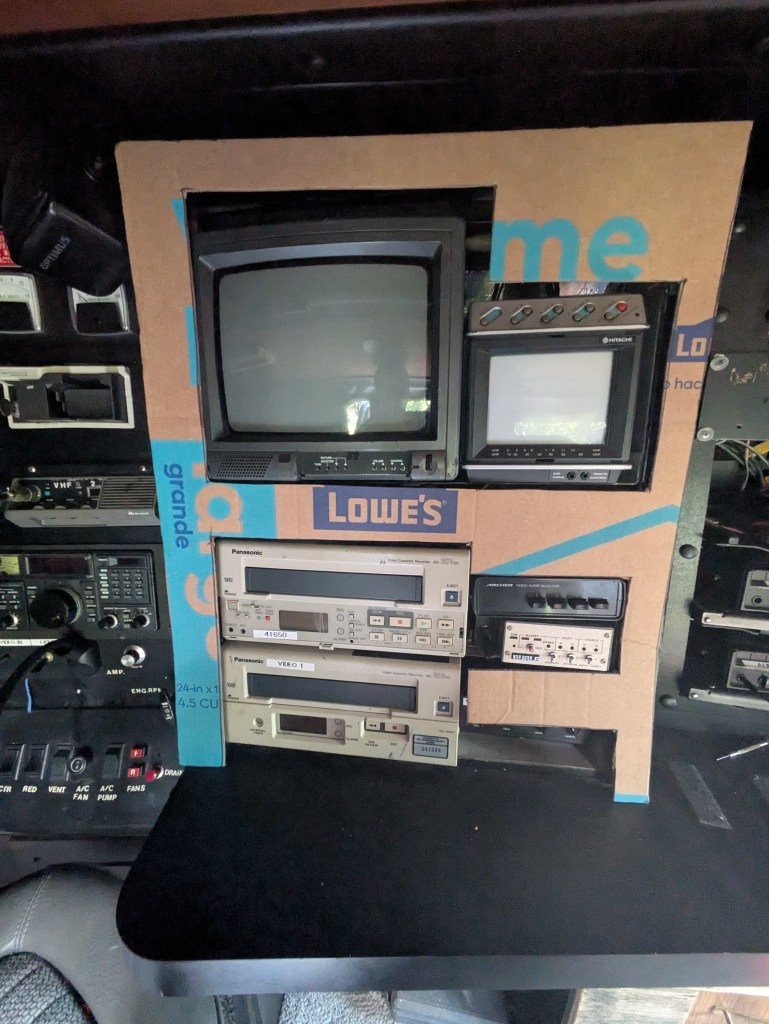
This was a low-tech upgrade. We first measured the primary rack along with the dimensions of all the equipment, then laid out a template on cardboard. Once we were happy with how the template fit, we cut the entire piece out of a single sheet of 7/16-inch plywood. We routed the edges, sanded it smooth, and finished it with flat black paint prior to installation.
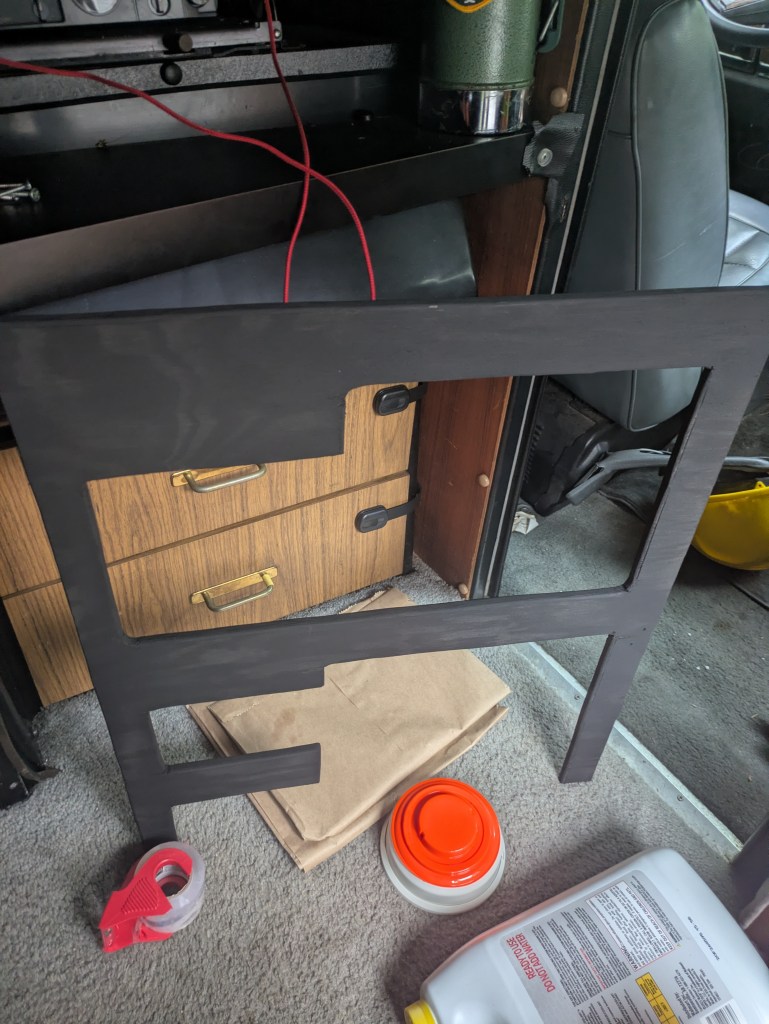
Placing these custom plates into the rack assembly bridges the gap between raw hardware and functional history. When you look into the rear cargo area, you no longer see an aging, hollowed-out utility van. You see a self-contained, high-leverage mobile command station engineered for long-term tactical deployment.
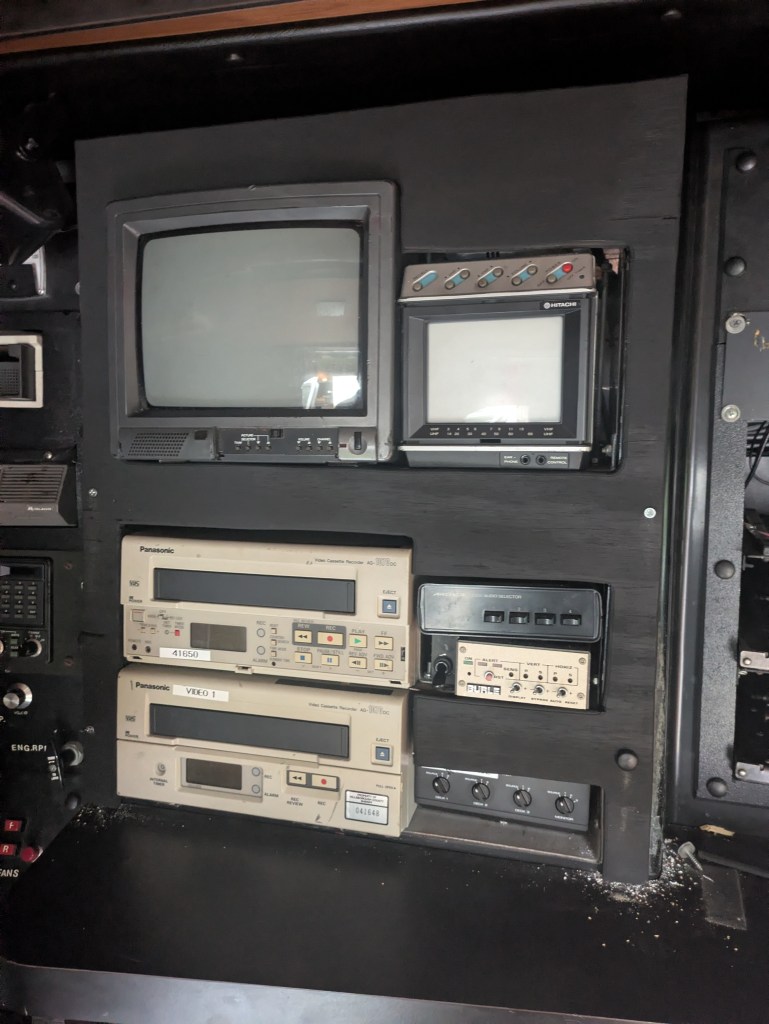
Now that the first rack is done, on to the second.
 The Vice Van: Hillsborough Files
Leave a comment