Restoring a late-1980s surveillance rig means balancing raw period accuracy with real-world functionality. While the cargo bay is designed to look like a freeze-frame from 1989, operating heavy electronics inside a wood-lined enclosure demands modern, reliable safety protocols.
Inside the tight confines of the rear cabin, vintage CRT monitors, retrofitted power grids, and dense wiring runs generate real thermal loads. Fire prevention and physical cover prep took priority in this phase of the build.
Replacing Legacy Sensors
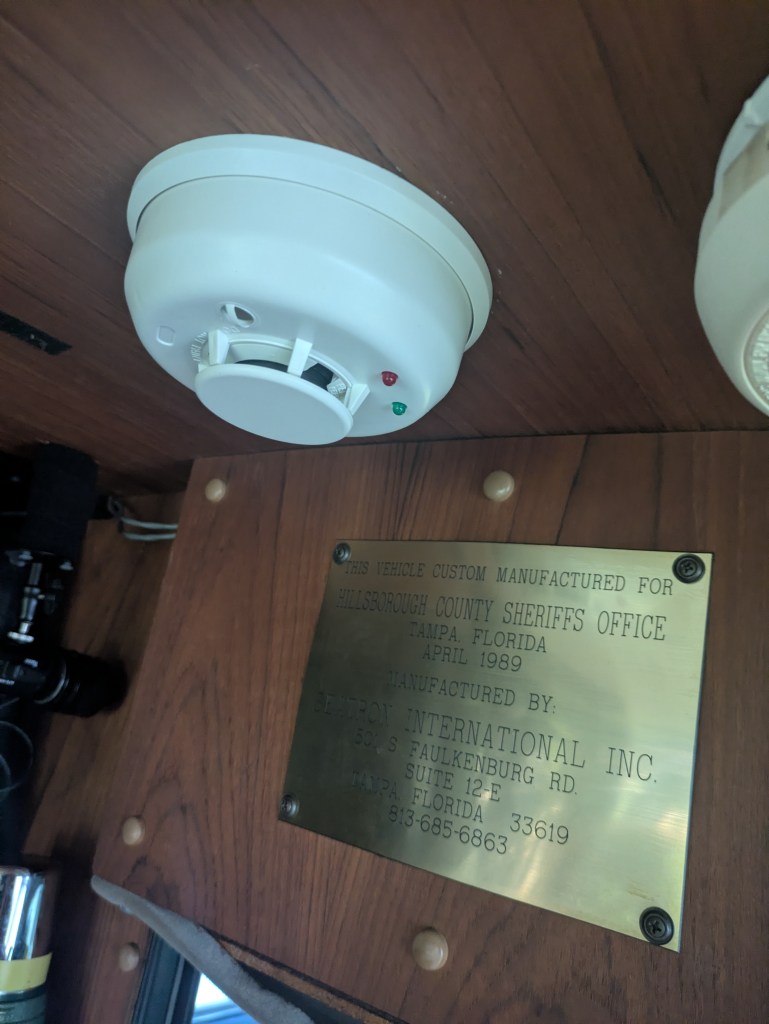
Mounted on the overhead wood paneling directly above the original brass Seatron International manufacturing plate were the original 1980s environmental alarms: a yellowed unit labeled “SMOKE” and an old carbon monoxide detector labeled “CO2.” Decades of heat exposure and age had rendered the original internal components useless.
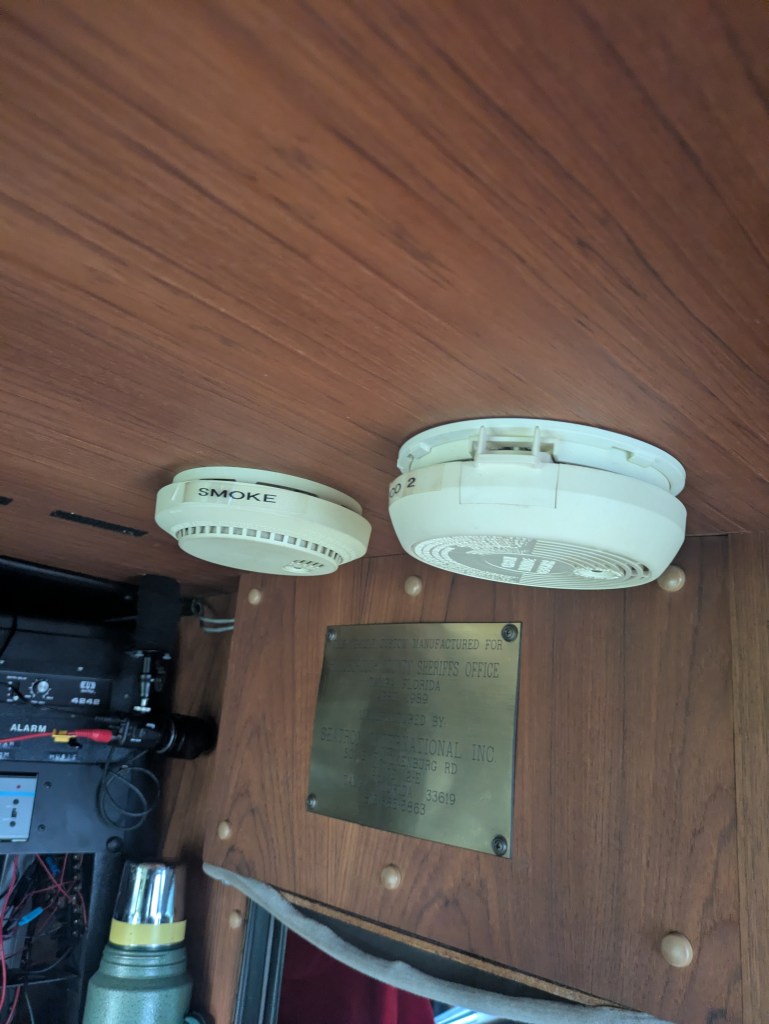
To bring the bay up to operational safety standards without completely ruining the cabin’s visual architecture, we pulled the non-functional smoke detector housing and installed a modern replacement. The new unit includes a sync sounder as well as a 900MHz wireless transponder that pairs directly with the security system in our shop.
This adds two massive protective features:
- Site-Wide Alerts: If the smoke detector triggers, it sounds an alarm throughout the entire property to alert us immediately.
- Automated Dispatch: If the alarm isn’t canceled, the fire department is automatically dispatched to our shop, ensuring this rolling time capsule is protected as much as possible.
Because the unit is linked to our shop’s security system, it won’t dispatch emergency services erroneously while out on the road—it simply drops out of range and functions as a standard standalone smoke detector until the van returns to the shop.
Staging the Operational Cover
Undercover surveillance vehicles relied heavily on blend-in utility disguises to sit unnoticed in commercial lots or residential streets for hours at a time. While the exterior looks like an unassuming work van, the interior cab needs immediate visual cues to maintain that cover if someone glances through a window.
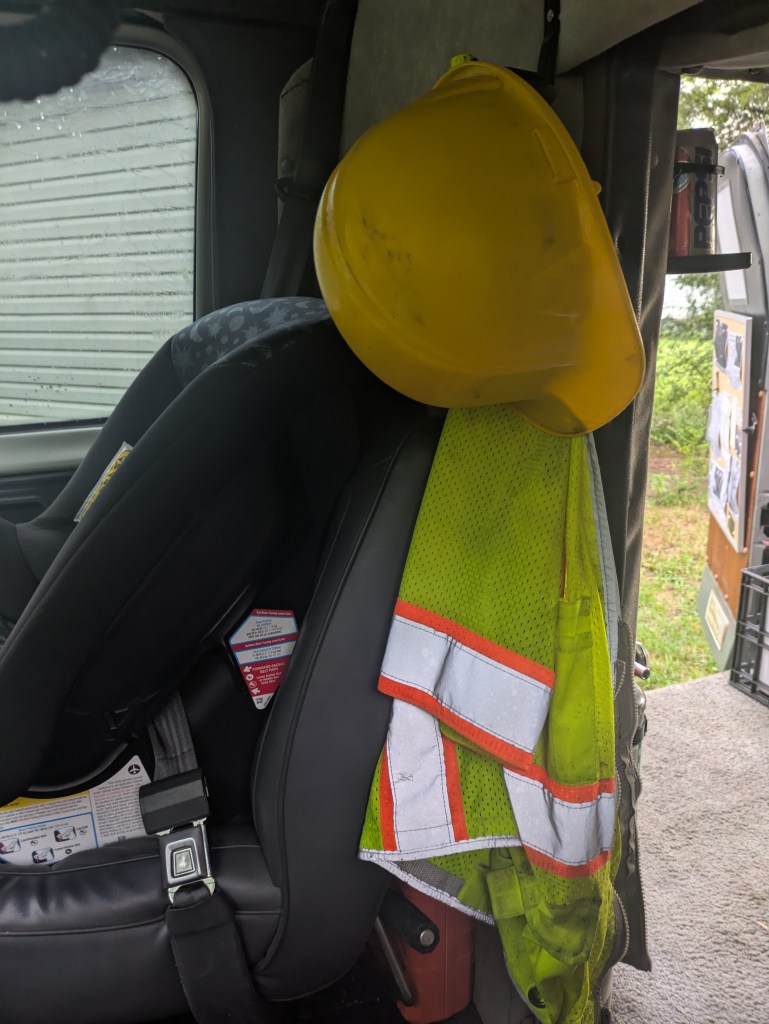
To complete the front-cab transition, we mounted a high-visibility yellow hard hat and a high-vis safety vest directly off the cab partition post behind the driver’s seat. The hard hat was actually inside the van when we bought it, and the vest is well-used and period-correct to the style worn when the van was actively in service.
Finally, we added a front window shade to protect the cab’s interior. After surviving intact for so many years, we aren’t going to let UV exposure crack the leather and trim now.
With active environmental monitoring mounted over the Seatron builder’s mark and the front-cab cover elements in place, the Econoline maintains both modern safety compliance and authentic field staging. Coming soon will be a modern fire extinguisher and a modern CO detector.
 The Vice Van: Hillsborough Files
Leave a comment